

TL;DR:
- The fear-tension-pain cycle perpetuates discomfort during labor by triggering fear, muscle tension, and increased pain.
- Addressing this cycle through education, relaxation, and continuous support can promote a calmer, more positive birth experience.
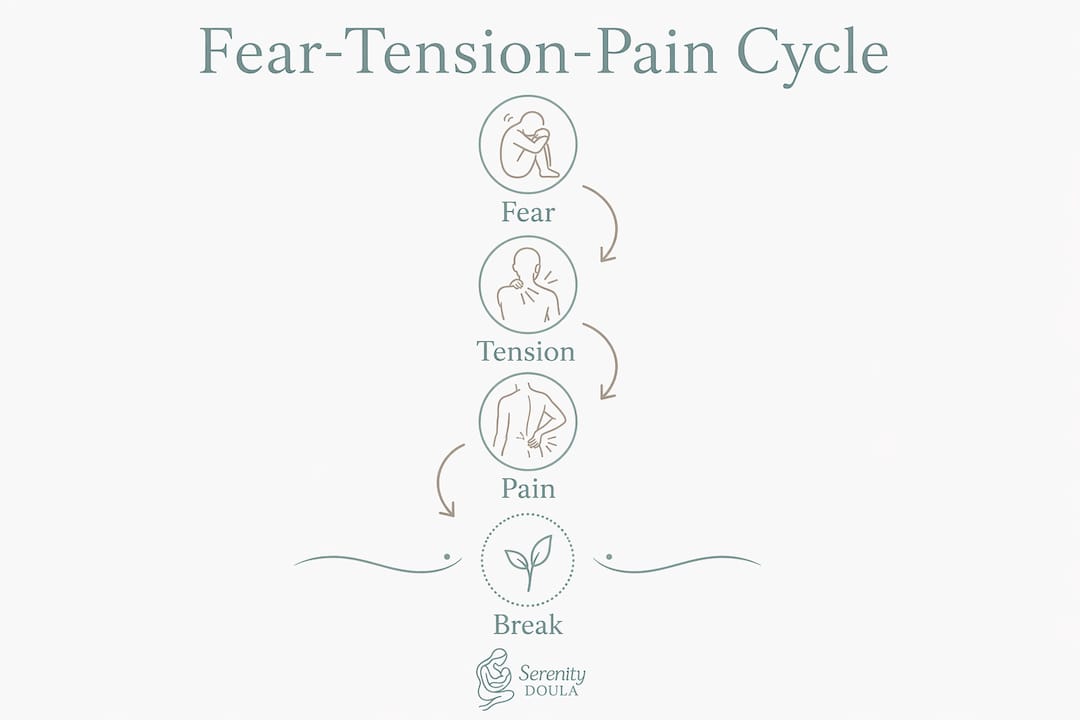
The fear-tension-pain cycle is a self-reinforcing loop that shapes how labor feels from the very first contraction. Here is how it works:
- Fear activates your body’s fight-or-flight response, flooding your system with adrenaline.
- Tension follows as your muscles, including the uterus and pelvic floor, tighten in response to that fear.
- Pain intensifies because tense muscles resist the natural opening and movement labor requires.
- More fear sets in as the pain grows, and the cycle repeats.
Understanding this loop is the first step toward breaking it. With the right preparation and support, you can replace it with a calmer, more confident experience.
Table of Contents
- How fear physically changes your labor
- Practical ways to interrupt the cycle during labor
- How continuous support transforms the birth experience
- How to recognize the cycle early in labor
- What happens when the cycle goes unaddressed
- Supporting yourself emotionally after delivery
- Key Takeaways
- FAQ
How fear physically changes your labor
When fear takes hold during labor, your body responds as if it is facing a threat. Adrenaline diverts blood flow away from the uterus, leaving those muscles with less oxygen and making contractions less efficient and more painful. Dr. Grantly Dick-Read, who first described this phenomenon in the early 20th century, called it the “fear-tension-pain syndrome of childbirth.”
| Factor | What happens | Effect on labor |
|---|---|---|
| Adrenaline surge | Blood redirected from uterus | Weaker, more painful contractions |
| Muscle tension | Pelvic floor and uterus tighten | Resistance to cervical dilation |
| Oxygen reduction | Uterine muscles work without adequate oxygen | Prolonged labor stages |
| Heightened pain perception | Nervous system on high alert | Pain feels more intense |
Pro Tip: Slow, deliberate breathing activates your parasympathetic nervous system, the body’s natural “rest and digest” mode, which directly counters the adrenaline response. Even three deep belly breaths can begin to shift your body’s state.

Practical ways to interrupt the cycle during labor
You do not have to wait until labor begins to build your toolkit. Most of what works is practiced beforehand.
- Childbirth education: Learning what labor actually feels like reduces the fear of the unknown. Prenatal education is one of the most consistent ways to lower fear levels before you ever reach the hospital.
- Breathing techniques: Slow, patterned breathing (such as Lamaze or HypnoBirthing methods) keeps the nervous system calm between and during contractions.
- Mindfulness and visualization: Focusing on a calm mental image or a simple mantra redirects attention away from pain signals.
- Movement: Walking, swaying, or using a birth ball encourages the baby to descend and gives your body something productive to do with the energy of contractions.
- Partner support: A reassuring hand, calm voice, or gentle counterpressure on the lower back can interrupt the fear response in real time. A step-by-step partner guide can prepare your support person well before the big day.
- Evidence-based pain relief: Epidurals, nitrous oxide, and IV medications remain valid options. Psychological interventions like cognitive behavioral therapy and counseling complement these by addressing the fear underneath the pain.
Pro Tip: Practice your chosen relaxation techniques at least three times a week starting in your third trimester. Muscle memory matters when you are in the middle of an intense contraction.
How continuous support transforms the birth experience
No technique works as well in isolation as it does with a calm, experienced person beside you.
“Replacing the fear-tension-pain cycle with a positive loop of education, confidence, and relaxation can empower birthing people to experience birth with greater ease.”
— Pain in Labor: A Conceptual Model for Intervention
Continuous labor support from a doula or dedicated birth team creates a sense of security that actively interrupts the cycle. Here is what that looks like in practice:
- Consistent presence: Someone who never leaves the room means fear has less room to grow.
- Informed advocacy: Knowing your options reduces the anxiety of unexpected decisions.
- Physical comfort measures: Positioning guidance, massage, and counterpressure ease tension directly.
- Emotional grounding: A calm voice and familiar face remind your nervous system that you are safe.
Prenatal education paired with continuous support reduces fear and anxiety during labor, even for people who did not identify as fearful going in.
Pro Tip: Ask your doula or midwife to use a low, steady voice during contractions. Tone of voice is one of the fastest ways to signal safety to a laboring person’s nervous system.
How to recognize the cycle early in labor
Catching the loop before it gains momentum gives you the best chance of redirecting it.
- Shallow, rapid breathing or breath-holding during contractions
- Shoulders rising toward the ears or jaw clenching
- Feeling an urge to escape or a sense of panic between contractions
- Describing pain as “unbearable” very early in labor, before active phase begins
- Difficulty making eye contact or responding to your support person
Any of these signals is a cue to pause, breathe, and lean into your support team.
What happens when the cycle goes unaddressed
Fear and anxiety during labor are linked to longer labor stages and higher rates of cesarean section. Chronic tension creates a feedback loop that is genuinely hard to exit mid-labor without outside help. Uterine contractions become less coordinated, progress slows, and exhaustion compounds the fear. Addressing the cycle early, ideally before labor begins, protects both the physical and emotional arc of your birth.
Supporting yourself emotionally after delivery
The effects of a fear-heavy labor do not always end when the baby arrives. Some parents carry anxiety, intrusive memories, or a sense of disappointment about their birth experience into the postpartum weeks.
- Debrief with your care team: Talking through what happened, and why, can dissolve confusion and self-blame.
- Perinatal mental health support: A therapist who specializes in perinatal care can help process difficult birth experiences. Perinatal mental health resources are more accessible than most new parents realize.
- Partner check-ins: Partners can also carry birth trauma. Creating space for both of you to process matters.
- Postpartum doula support: Continuity of care from someone who was present at the birth can ease the emotional transition.
Key Takeaways
Breaking the fear-tension-pain cycle before and during labor, through education, relaxation practice, and continuous support, is the most effective path to a calmer, more positive birth experience.
| Point | Details |
|---|---|
| Fear drives the cycle | Adrenaline from fear reduces uterine blood flow, intensifying pain and slowing progress. |
| Tension is the physical link | Tight pelvic floor and uterine muscles resist the opening labor requires. |
| Education reduces fear | Prenatal preparation replaces the unknown with confidence, weakening the cycle’s grip. |
| Continuous support interrupts it | A doula or dedicated birth team creates safety signals that calm the nervous system in real time. |
| Postpartum care matters too | Emotional debriefing and perinatal mental health support address lingering effects after delivery. |
FAQ
What is the fear-tension-pain cycle in labor?
It is a self-reinforcing loop where fear triggers muscular tension, tension increases pain, and pain amplifies fear. Dr. Grantly Dick-Read first described this as the “fear-tension-pain syndrome of childbirth.”
Can the cycle be broken during active labor?
Yes. Breathing techniques, movement, and the presence of a calm support person can interrupt the cycle even mid-labor, though preparation beforehand makes it significantly easier.
Does having an epidural stop the cycle?
An epidural addresses the pain component but does not resolve underlying fear. Pairing medical pain relief with emotional support and coping strategies for labor gives you the most complete approach.
How does a doula help break the cycle?
A doula provides continuous presence, physical comfort, and emotional grounding, all of which signal safety to the nervous system and reduce the adrenaline response that drives the cycle.
What if I still feel anxious after my birth?
Postpartum anxiety and birth-related distress are common and treatable. Speaking with a perinatal mental health therapist or debriefing with your care team are both effective first steps.
If you are preparing for birth in Bucks County, whether at Trinity Health St. Mary in Langhorne or another local hospital, Serenity Doula offers personalized pregnancy and birth support designed to help you feel grounded, informed, and genuinely cared for. Book a free consultation and let’s talk about your birth.

— Alexis Wallace, Bucks County birth doula with 10+ years of experience