
TL;DR:
- A peanut exercise ball is a specially designed fitness tool that offers enhanced stability during pregnancy, labor, and postpartum recovery. Its double-lobed shape keeps the pelvis supported and restricts side-to-side movement, aiding comfort and safety during labor. Proper sizing, inflation, and safety precautions ensure effective use of this ergonomic tool for pregnancy support and core rebuilding.
A peanut exercise ball is a specially shaped fitness and therapy tool designed to support your body during pregnancy, labor, and postpartum recovery. Unlike a standard round stability ball, this one looks exactly like its name suggests: a peanut. That double-lobed shape is the whole point. It gives you far more stability and control, which matters a lot when your center of gravity is shifting week by week. Whether you are preparing for labor, working through contractions, or rebuilding core strength after birth, a peanut stability ball can be one of the most practical tools in your corner.
What is a peanut exercise ball and why does the shape matter?
A peanut exercise ball, also called a peanut ball or peanut fitness ball, is an ergonomically shaped tool that promotes proper posture and pelvic alignment during pregnancy and labor. The standard industry term you will hear from physical therapists and labor nurses is simply “peanut ball.” The shape is not just aesthetic. It is functional.
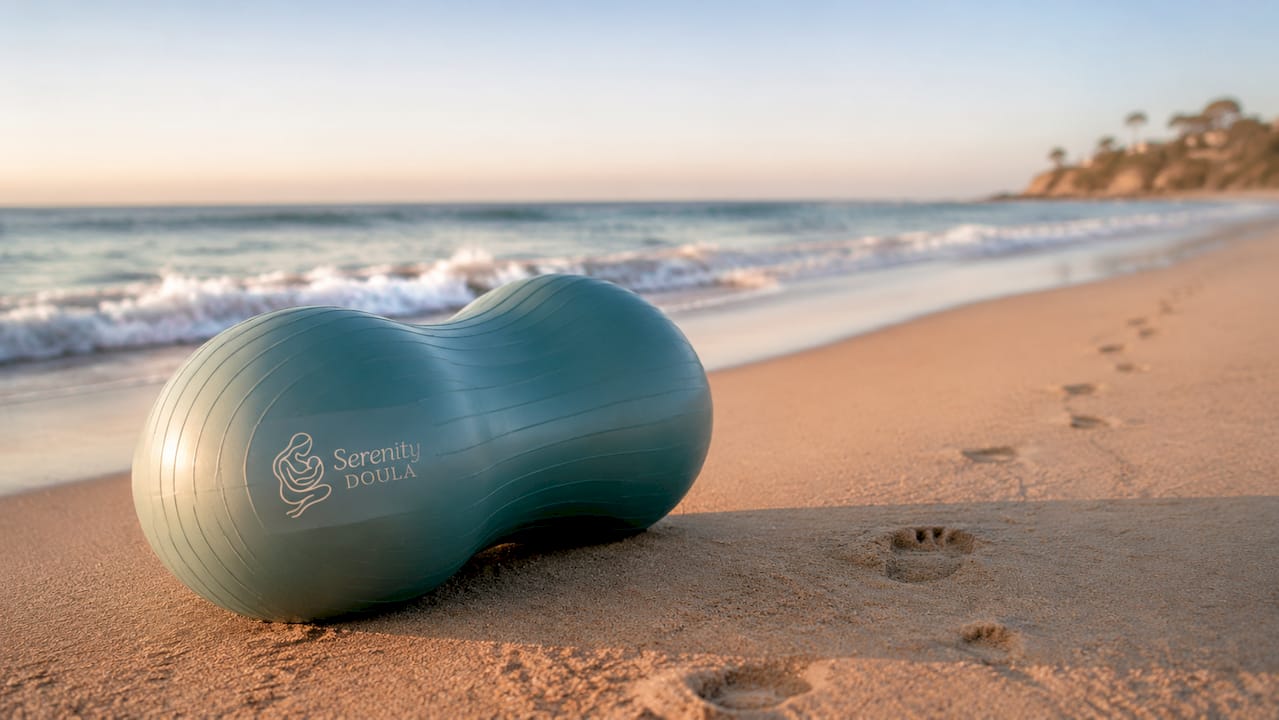
The double-lobed design creates a natural saddle between the two rounded ends. That saddle keeps your hips open and your pelvis in a supported position without requiring constant muscular effort to stay balanced. You can sit, lean, or rest against it with confidence.
Products like the InnotechSC peanut ball are made from anti-burst PVC, which means if the ball is ever punctured, it deflates slowly and safely rather than popping suddenly. That feature is especially important during pregnancy, when a sudden fall could be dangerous. Most quality peanut balls in the $18–$25 range include a pump and are built to handle the demands of both home use and clinical settings.
How does a peanut ball differ from a round exercise ball?
This is one of the most common questions, and the answer changes how you think about both tools. A traditional round stability ball moves in every direction. That multidirectional movement is great for certain core exercises, but it requires constant balance work and can feel unpredictable, especially during labor or early postpartum recovery.
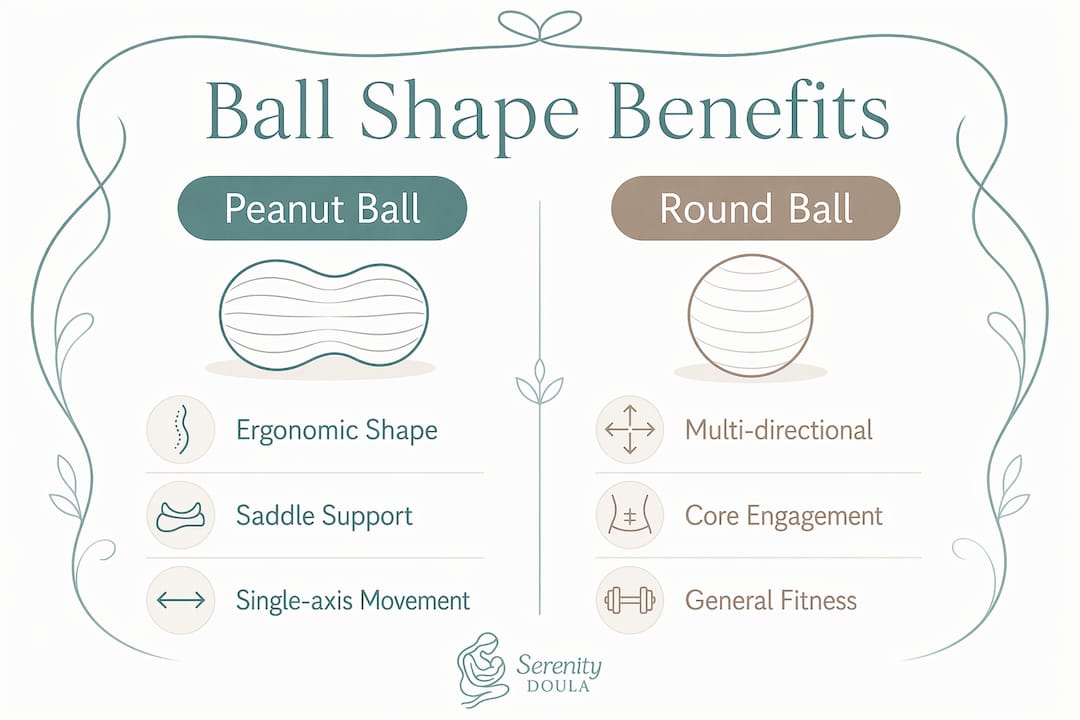
A peanut ball moves on a single axis, back and forth, not side to side. That single-axis movement is the key difference. It means you get the gentle rocking motion that helps with labor comfort and pelvic mobility, without the risk of sliding sideways.
Here is what that means in practice:
- Stability during labor: The saddle shape restricts side rolling, giving you and your support team more confidence during contractions.
- Easier positioning: You can lean forward, sit upright, or rest on your side against the ball without fighting to stay centered.
- Less fatigue: Because the ball constrains movement to one axis, your body uses less energy to maintain position. That matters a lot during a long labor.
- Postpartum core work: The controlled movement makes it safer for reconnecting with your core muscles before you are ready for more demanding exercises.
- Anti-burst safety: Quality peanut balls use the same slow-deflation PVC technology as clinical therapy balls, which is a non-negotiable feature during pregnancy.
Pro Tip: If you have an epidural, a peanut ball placed between your knees while lying on your side can help keep your pelvis open and encourage fetal rotation. Check out this guide on birth positions with an epidural for more positioning ideas.
How to choose the right size peanut ball
Choosing the wrong size is the most common mistake people make, and it eliminates most of the ergonomic benefits. The goal is simple: when you sit on the ball, your feet should rest flat on the floor with your knees at roughly a 90-degree angle.
Selecting the correct size requires measuring your heel-to-knee length while seated with your feet flat. That measurement tells you which ball height will keep your hips level and your pelvis in a neutral position.
Here is a general sizing guide:
- Measure first. Sit in a chair with your feet flat. Measure from the floor to the top of your knee.
- Match that measurement to ball height. Peanut balls range from 12 to 20 inches in height, with lengths from 29.5 to 43.5 inches.
- Check weight capacity. Depending on size, weight capacities range from 200 to 300 pounds. Always confirm the rating before purchasing.
- Test the fit. When you sit on the inflated ball, your hips should be level with or slightly above your knees. If your knees are higher than your hips, size up.
- Consider your use case. If you plan to use the ball during labor while lying on your side, a slightly larger ball placed between your knees may feel more supportive.
| Your Height | Recommended Ball Height | Typical Ball Length |
|---|---|---|
| Under 5’0" | 12–14 inches | 29.5–33 inches |
| 5’0" to 5’6" | 14–16 inches | 33–37 inches |
| 5’7" to 6’0" | 16–18 inches | 37–41 inches |
| Over 6’0" | 18–20 inches | 41–43.5 inches |
Pro Tip: If you are between sizes, go with the larger option during pregnancy. Your body needs more support as your bump grows, and a slightly taller ball keeps your hips in a more open, comfortable position.
How to use a peanut ball during pregnancy and postpartum
Getting the most out of your peanut fitness ball starts with proper inflation. An under-inflated ball loses its ergonomic shape and stops supporting your pelvis correctly. An over-inflated ball puts stress on the seams and can feel uncomfortably rigid.
Inflation and setup
- Use the pump included with your ball, such as the one that comes with the InnotechSC peanut ball, or a compatible manual or electric pump.
- Inflate until the ball feels firm but still has a small amount of give when you press your hand into it.
- Top up the air every few weeks, since all PVC balls lose a small amount of air over time.
- Place the ball on a non-slip surface before use.
Exercises and positions to try
The benefits of a peanut exercise ball show up most clearly when you use it consistently and with intention. Here are some of the most effective uses:
- Active sitting: Sit on the ball at your desk or while watching TV. The subtle pelvic micro-movements that happen naturally while you balance support postpartum core reconnection far better than sitting in a static chair.
- Pelvic tilts: Sit upright on the ball and gently rock your pelvis forward and back. This relieves lower back pressure and keeps your pelvic floor engaged.
- Side-lying labor position: Place the ball between your knees while lying on your side during labor. This opens the pelvis and can encourage your baby into an optimal position.
- Gentle hip circles: Sitting on the ball, make slow, small circles with your hips. This is especially soothing during early labor contractions.
- Leaning forward rest: Drape your upper body over the ball while kneeling on a mat. This takes pressure off your lower back and lets your belly hang freely.
| Position | Best For | When to Use |
|---|---|---|
| Active sitting | Core reconnection, posture | Daily, pregnancy and postpartum |
| Pelvic tilts | Back pain relief, pelvic mobility | Third trimester, postpartum |
| Side-lying with ball | Fetal positioning, labor comfort | Active labor |
| Hip circles | Contraction relief, relaxation | Early and active labor |
| Forward lean/drape | Back pressure relief, rest | Any trimester, early labor |
Maintenance
Clean the surface with mild soap and warm water after each use, then air dry completely before storing. Check the seams and surface for any signs of wear every few weeks.
Safety tips for using a peanut ball during pregnancy
Safety is not complicated here, but a few rules make a real difference.
- Always use anti-burst PVC. The slow-deflation design prevents sudden collapse, which is the most important safety feature for pregnant users.
- Never use on slippery floors. Place a yoga mat or non-slip rug underneath the ball every time.
- Have support nearby. During labor especially, always have your partner, doula, or nurse present when using the ball.
- Inspect before each use. Look for cracks, soft spots, or seam stress before sitting on the ball.
- Avoid over-inflation. A ball that is too firm loses its cushioning and risks seam damage.
“Incorrect inflation is one of the most common causes of dissatisfaction with peanut balls. Under-inflation eliminates ergonomic benefits, while over-inflation risks seam damage.” — Fun & Function
For more on building a full postpartum recovery plan, the postpartum recovery essentials guide from Myserenitydoula covers tools, timelines, and self-care strategies in one place.
Key takeaways
A peanut exercise ball supports pregnancy and postpartum recovery through its single-axis movement, anti-burst safety design, and ergonomic shape that keeps your pelvis open and your core gently engaged.
| Point | Details |
|---|---|
| Shape drives the benefit | The double-lobed design restricts sideways rolling and keeps your pelvis in an open, supported position. |
| Size selection is critical | Match ball height to your heel-to-knee measurement so your feet rest flat and your hips stay level. |
| Inflation matters | Inflate until firm with slight give; top up every few weeks to preserve ergonomic support. |
| Anti-burst PVC is non-negotiable | Slow-deflation material prevents sudden collapse, making it safe for use during pregnancy and labor. |
| Active sitting builds recovery | Daily use as a seat encourages subtle pelvic movement that reconnects core muscles postpartum. |
What i have learned from watching families use the peanut ball
I have seen a lot of birth tools come and go, and the peanut ball is one of the few that consistently earns its place in the room. What surprises most families is how much they use it before labor even starts. Sitting on it during the third trimester, doing gentle pelvic tilts while watching TV, is one of the simplest ways to stay mobile and keep your lower back from tightening up.
The size question trips people up more than anything else. I have watched clients buy a ball that looked right online, only to find their knees were higher than their hips when they sat on it. That one sizing mistake undoes most of the benefit. Measure first, always.
One more thing: do not wait until labor to try it. Get comfortable with the ball at home so that when contractions start, using it feels natural rather than like a new skill you are learning under pressure. The families who practice with it ahead of time are the ones who actually reach for it in the labor room.
— Alexis Wallace
Ready to use your peanut ball with expert support?
A peanut ball is a wonderful tool, and it works even better when you know exactly how to use it in the context of your birth plan and recovery goals. At Myserenitydoula, we work with families to integrate comfort tools like the peanut ball into a personalized labor and postpartum support plan.
Whether you are preparing for your first birth or recovering after your second, having a doula by your side means you are never guessing. Explore pregnancy and birth support with Myserenitydoula to learn how we can support you through labor positioning, postpartum healing, and everything in between. You deserve care that is as thoughtful as you are.
FAQ
What is a peanut exercise ball used for during labor?
A peanut ball is used during labor to keep the pelvis open, support fetal positioning, and provide comfort during contractions. It is especially useful for people with epidurals who cannot reposition themselves easily.
How do i know what size peanut ball to buy?
Measure from your heel to your knee while seated with your feet flat on the floor, then match that measurement to the ball’s height. Your feet should rest flat and your hips should be level with or slightly above your knees.
Is a peanut ball safe to use during pregnancy?
Yes, when made from anti-burst PVC, a peanut ball is safe for use during pregnancy. The slow-deflation design prevents sudden collapse, and using it on a non-slip surface with support nearby keeps the risk minimal.
Can i use a peanut ball for postpartum recovery?
Absolutely. Active sitting on a peanut ball encourages subtle pelvic micro-movements that help reconnect core muscles after birth. It is a gentle, low-impact way to begin rebuilding strength before returning to more demanding exercise.
How often should i inflate my peanut ball?
Top up the air in your peanut ball every few weeks, since all PVC balls lose small amounts of air over time. The ball should feel firm with a slight give when you press your hand into it, not rock hard and not squishy.