

TL;DR:
- Building a birth support team involves choosing a medical provider, a doula, and trusted family or friends to support you through pregnancy, labor, and postpartum. Starting selection early, vetting carefully, and assigning clear roles ensures calm and effective support tailored to your birth setting. Organizing postpartum help with specific tasks and shared calendars prevents reliance on vague offers and promotes sustainable assistance.
A birth support team is defined as the intentional group of people you choose to guide, comfort, and advocate for you through pregnancy, labor, and postpartum recovery. Knowing how to set up a birth support team well before your due date is one of the most meaningful decisions you will make during pregnancy. The right people around you create calm, hold space for your choices, and help your body do what it already knows how to do. This guide walks you through who to include, how to vet each person, how to assign roles for labor day, and how to organize support after your baby arrives.
How to set up a birth support team that works for you
Your birth support team typically includes two layers of people. The first layer is your medical team: your OB/GYN, midwife, or maternal-fetal medicine specialist. The second layer is your personal support network: a doula, your partner, a lactation consultant, a pediatrician, and any trusted family members or friends you choose to include.
Each person plays a distinct role. Here is a breakdown:
- OB/GYN or midwife: Your primary clinical provider. They manage your prenatal care, monitor your health, and attend your birth.
- Doula: A trained birth professional who provides continuous physical comfort, emotional reassurance, and information throughout labor. Evidence-based doula care consistently shows improved birth outcomes and greater satisfaction.
- Partner: Your primary emotional anchor. Partners are not expected to be birth experts. Their job is to hold space, offer comfort, and follow your lead.
- Lactation consultant: Especially valuable if hospital staffing for this role is limited. Arranging a private consultant before birth is a smart move.
- Pediatrician: Selected before birth so newborn care begins without delay.
- Family or friends: Optional, and chosen carefully. Include only people whose presence makes you feel calmer, not more anxious.
Your birth setting matters too. A hospital birth may limit the number of support people in the room. A birth center or home birth typically allows more flexibility. Know your setting’s policies before finalizing who attends.
Pro Tip: A support network functions as a web of physical and remote helpers. A trusted friend or family member who joins by phone or video call is a completely valid part of your team.

When and how to choose your birth support people
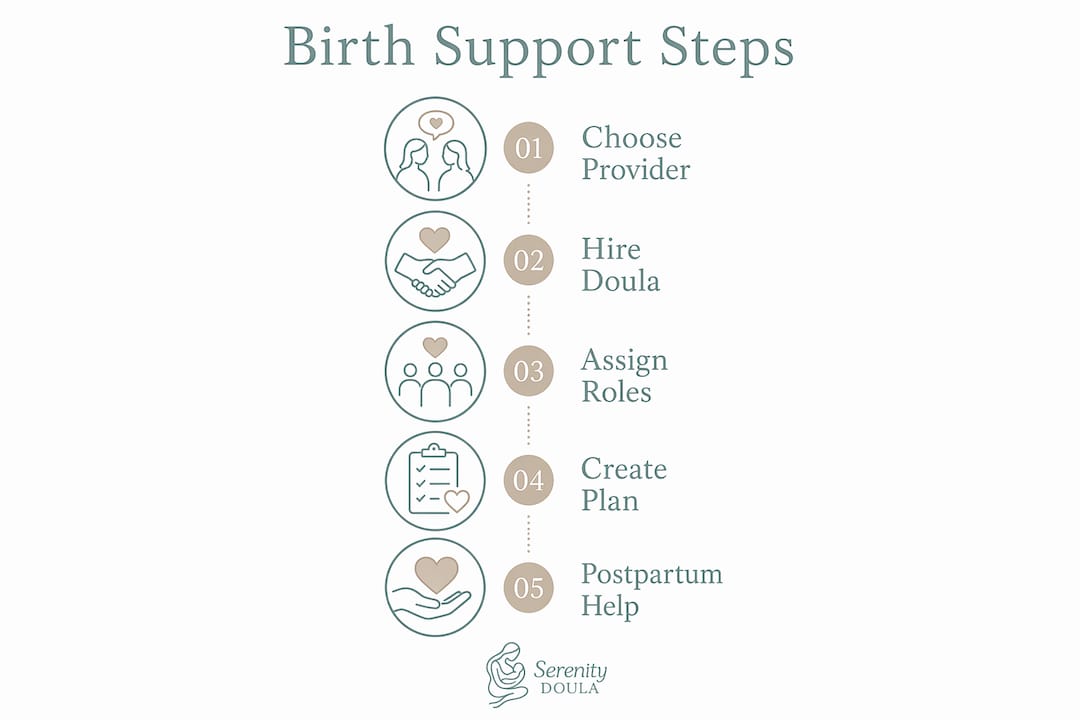
Timing matters when building a birth support network. Start selecting your primary provider between weeks 4–8 of pregnancy. Hire your doula between weeks 13–20, since experienced doulas book quickly. Finalize your full team, including postpartum helpers, between weeks 28–36.
Here is a step-by-step process for vetting each person:
- Interview every provider. Ask your OB/GYN or midwife about their cesarean rate, induction philosophy, and how they handle unexpected changes to your birth plan. Vetting providers before birth protects your ability to make informed choices during labor.
- Check credentials. Doulas certified through DONA International or CAPPA have completed recognized training. Midwives should be licensed in your state.
- Assess communication style. You want someone who listens, explains clearly, and respects your preferences without judgment.
- Trust your gut. If a provider makes you feel dismissed or rushed, that feeling will be amplified during labor.
- Switch if needed. Many parents do not realize they can change providers as late as weeks 31–33. You are not locked in. Finding a better fit is always worth the effort.
Pro Tip: Bring your partner to provider interviews. They will be in that room with you, and their comfort with your team matters just as much as yours.
How to assign roles and prepare for labor day
Defining specific labor-day roles before labor starts is one of the most practical things you can do. When roles are clear, you do not have to manage anyone during contractions. Your team just knows what to do.
Here are common roles to assign:
- Primary communicator: One person (often your doula or partner) speaks with nurses and doctors on your behalf when you need to focus inward.
- Comfort manager: Responsible for counter-pressure, warm compresses, position changes, and keeping the environment calm.
- Room guardian: Keeps the space quiet, dims lights, limits unnecessary interruptions, and manages visitors.
- Backup support: A trusted person on call who can step in if your primary support person needs a break.
Use a simple shared birth plan or one-page checklist to communicate these roles. Apps like Google Docs or a shared notes file work well for keeping everyone aligned. Review the plan together at least once before your due date.
| Role | Person Assigned | Key Responsibility |
|---|---|---|
| Primary communicator | Partner or doula | Speaks with medical staff |
| Comfort manager | Doula | Physical support and positioning |
| Room guardian | Trusted family member | Manages environment and visitors |
| Backup support | Close friend | Available on call if needed |
Pro Tip: Choose people who help your body relax. Calm is contagious in a birth room, and so is anxiety. Be honest with yourself about who brings which energy.
How to organize postpartum support after birth
Postpartum support works best when it is specific. Vague offers like “let me know if you need anything” rarely translate into real help. Assign specific tasks to family and friends between weeks 28–32 so your postpartum plan is ready before you give birth.
Here is how to organize it:
- Create a task list. Divide needs into categories: meal prep, household chores, newborn care, and emotional check-ins.
- Use a shared digital calendar. Google Calendar or a free app like Meal Train lets helpers sign up for specific days and tasks without overlap.
- Rotate helpers. Avoid leaning on one person too heavily. Rotating support prevents burnout and keeps your network sustainable.
- Include your doula in postpartum planning. A postpartum doula can fill gaps when family is unavailable, especially overnight.
- Schedule follow-ups early. Book your lactation consultant and pediatrician appointments before you leave the hospital. Postpartum recovery support is especially important in the first two weeks after a cesarean birth.
You can also read through these new dad postpartum tips with your partner so they feel prepared and confident in their role after baby arrives.
Key takeaways
A well-built birth support team is defined by the quality of its members, not the size, with calm, aligned people making the greatest difference in your birth experience.
| Point | Details |
|---|---|
| Start early | Begin choosing your primary provider at weeks 4–8 and your doula by weeks 13–20. |
| Vet every person | Ask providers about their cesarean rates, induction philosophy, and flexibility with birth plans. |
| Assign clear roles | Define who communicates, who manages comfort, and who guards the room before labor begins. |
| Organize postpartum help | Use a shared digital calendar and assign specific tasks to avoid vague, unreliable offers. |
| Quality over quantity | A small, calm, aligned team outperforms a large, disorganized one every time. |
What i have learned about building a birth team
One thing I see consistently is that parents spend more time choosing a stroller than choosing their birth team. That is completely understandable. The stroller is tangible. The birth team feels abstract until labor starts.
Here is what I know from experience: a birth team does not need to be large or perfect. What it needs is people who listen, respect your choices, and stay calm when things get intense. One grounded, present partner and one skilled doula will serve you better than a room full of well-meaning people who are managing their own anxiety.
The other thing I want you to hear is this: you are allowed to change your mind. Switch providers. Remove someone from your labor room. Adjust the plan at 35 weeks. Your comfort and your sense of safety are not negotiable. A team that truly supports you will welcome those conversations, not resist them. Start with holistic childbirth preparation early, and give yourself permission to build a team that actually feels right.
— Alexis Wallace
Ready to build your birth team with Myserenitydoula?
You do not have to figure this out alone. Myserenitydoula offers professional pregnancy and birth support that covers every stage, from prenatal planning to labor support to postpartum recovery. Whether you are planning a natural birth, a medicated birth, or a cesarean, the team at Myserenitydoula brings calm, experience, and genuine care to your side.

Myserenitydoula also offers childbirth education classes designed to prepare both you and your partner for what is ahead. Schedule a free consultation today and take the first real step toward a birth experience that feels supported, informed, and truly yours.
FAQ
What is a birth support team?
A birth support team is the intentional group of people you choose to support you through pregnancy, labor, and postpartum. It typically includes a primary medical provider, a doula, your partner, and selected family or friends.
When should i start choosing birth support people?
Start selecting your primary care provider between weeks 4–8 and hire your doula between weeks 13–20. Postpartum helpers should be organized by weeks 28–32.
Can i switch providers late in pregnancy?
Yes. You can change your primary provider as late as weeks 31–33 if the fit is not right. Finding someone who aligns with your birth vision is always worth the change.
Do i need a doula if i already have a midwife?
A doula and a midwife serve different roles. Your midwife manages clinical care. A doula provides continuous emotional and physical support throughout labor, which a midwife cannot always offer. Learn more about the difference between a doula and midwife to decide what fits your needs.
How do i organize postpartum help effectively?
Assign specific tasks like meal prep, household chores, and newborn care to individual helpers. Use a shared digital calendar so everyone knows their role and burnout is avoided.