

TL;DR:
- A doula is a trained, non-clinical birth companion who offers continuous emotional, physical, and informational support throughout childbirth.
- Choosing the right doula depends on matching their support style, experience, and logistical clarity with your birth preferences and safety.
- Trusting your intuition and feeling safe with your doula are essential factors that often predict a more empowered birth experience.
A doula is defined as a trained, non-clinical birth companion who provides continuous emotional, physical, and informational support before, during, and after childbirth. The most important doula considerations for families center on three things: finding someone whose support style fits your birth vision, whose experience matches your needs, and whose presence makes you feel genuinely safe. Continuous doula support has been correlated with reduced cesarean rates, shorter labors, better breastfeeding initiation, and improved maternal satisfaction. That means choosing the right doula is not just a comfort decision. It is a health decision.
1. Important doula considerations for families start with support style
The first thing to understand is that doulas do not all work the same way. Some are hands-on, using massage, positioning, and physical comfort techniques throughout labor. Others lead with calm, quiet presence. Some are energetic cheerleaders who talk you through every contraction. None of these styles is wrong. The question is which one fits you.
Ask any doula you interview how they typically show up in the birth room. Then ask how they adapt when a birth plan changes completely. The best doulas stay calm during unpredictable birth moments, focusing on non-judgmental support during what many call “the pivot.” That pivot moment, when an unmedicated birth becomes a cesarean, or a home birth transfers to a hospital, is exactly when support style matters most.
You should also ask how they support your partner or other people in the room. Experienced doulas know how to support multiple people in the birth room, including partners, without displacing anyone. A good doula pulls your partner in rather than pushing them aside.
Pro Tip: Ask your doula: “Tell me about a birth where everything changed unexpectedly. How did you support that family?” Their answer will tell you more than any credential.
2. How to assess a doula’s experience, training, and certifications
Certification matters, but it does not tell the whole story. Organizations like DONA International set training standards and require doulas to complete specific coursework, attend births, and gather client evaluations. Completing that process shows commitment. It does not guarantee that a doula has handled a fast labor, a complicated hospital transfer, or a family with complex cultural needs.
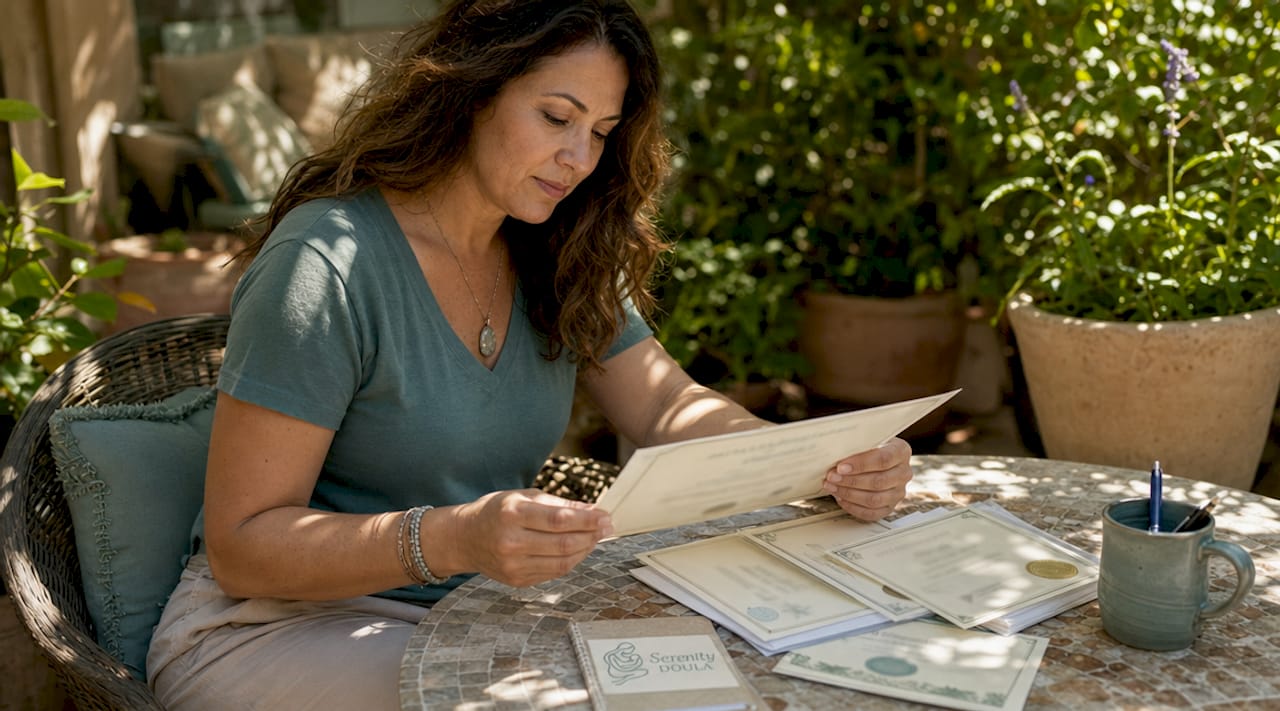
Doula certification indicates training but does not guarantee extensive experience in complex birth settings. This means you need to ask two separate questions: “Are you certified?” and “How many births have you attended?” Both answers matter.
Here is what to look for when evaluating experience:
- Number of births attended, including hospital, birth center, and home settings
- Familiarity with your specific hospital or birth location
- Experience with your type of birth plan, whether natural, medicated, or cesarean
- Backup arrangements if they are unavailable when you go into labor
- How they handle fast labors or situations where they arrive late
Red flags include any doula who promises specific birth outcomes or offers clinical advice. A doula’s true value lies in emotional and informational support, not medical decision-making. If a doula tells you they can guarantee a vaginal birth or advises you to refuse a medical recommendation, that is a serious boundary violation.
Pro Tip: Balancing certification with local hospital experience and personal chemistry often identifies the best fit. Credentials open the door. Connection closes it.
3. What logistical and practical factors to clarify before hiring
Before you sign anything, get clear on exactly what is included. Standard birth doula packages typically include one to two prenatal visits and one to two postpartum visits alongside continuous labor support. Some doulas offer more. Some offer less. You need to know before you commit.
Here is a comparison of what typical doula packages look like:
| Package Type | Prenatal Visits | Postpartum Visits | Continuous Labor Support | Typical Fee Range |
|---|---|---|---|---|
| Basic | 1 | 1 | Yes | $800 to $1,500 |
| Standard | 2 | 2 | Yes | $1,500 to $2,500 |
| Full Support | 2 to 3 | 3 or more | Yes | $2,500 to $4,500+ |
Beyond visit counts, ask about these practical details:
- On-call period: When does your doula go on call around your due date, and for how long?
- Backup doula: Who covers if your doula is unavailable, and will you meet that person beforehand?
- Payment plans: Payment plans and sliding scale fees make doulas more accessible, but cost alone does not reflect quality.
- Insurance: Some health insurance plans, HSA accounts, and FSA funds cover doula fees. Ask your provider.
- Cancellation policy: What happens if you need to cancel or if your doula cancels on you?
Doulas should have clear on-call periods around due dates with backup arrangements to confirm support is always available. If a doula cannot clearly answer the backup question, keep looking.
4. What unique qualities and boundaries build a trusting relationship
Beyond logistics and credentials, there is a quality that no checklist fully captures: the feeling of being genuinely safe with someone. You are going to be at your most vulnerable. You need to trust that your doula will hold space for you without judgment, without agenda, and without making the experience about themselves.
“A doula’s personal birth philosophy should not interfere. They should always prioritize and champion the client’s autonomous choices.” — Choosing a Doula
Watch for these qualities during your consultation:
- They listen more than they talk
- They ask about your preferences before sharing their own
- They respond to questions about cultural or religious needs with genuine curiosity, not discomfort. Adjusting to food restrictions, prayer, modesty, and family roles is a mark of truly personalized care.
- They set clear boundaries around their own role without being defensive about it
- They speak respectfully about medical providers rather than positioning themselves as an alternative
Discussing boundaries around the doula’s role in the delivery room supports a harmonious relationship between you, your doula, your partner, and your medical team. A doula who cannot clearly define where their role ends is one who may overstep it.
5. How to prepare for doula interviews and make your final choice
Treat your doula consultations like conversations, not job interviews. You are not just checking boxes. You are feeling out whether this person can hold you through one of the most intense experiences of your life.
Here is a framework for your consultations:
- Start with their story. Ask how they became a doula and what they love most about the work. Authentic answers reveal genuine motivation.
- Ask about their approach. “How would you describe your support style?” and “How do you handle it when a client’s birth plan changes?” are both worth asking.
- Cover the logistics. Confirm availability, backup plans, visit counts, and fees before the conversation ends.
- Ask for references. Speaking with one or two past clients gives you a real-world picture that no consultation can fully provide.
- Trust your gut. DONA International and other reputable organizations recommend free consultations specifically because personality and communication alignment matter as much as credentials.
Meet with at least two or three doulas before deciding. Taking notes after each consultation helps you compare not just what they said, but how you felt during the conversation. You can also explore what to ask a doula to build out your full question list before those meetings.
Key takeaways
Choosing the right doula requires matching support style, verified experience, and clear logistics to your specific birth vision and values.
| Point | Details |
|---|---|
| Support style alignment | Ask how your doula adapts when birth plans change unexpectedly. |
| Credentials plus experience | Certification shows training; hands-on birth experience shows readiness. |
| Logistical clarity | Confirm visit counts, on-call periods, backup plans, and fees before signing. |
| Boundaries and trust | A doula who respects your autonomy and sets clear role limits is a safer choice. |
| Consult multiple doulas | Meeting two to three candidates and comparing your gut feelings leads to the best fit. |
What I’ve learned about choosing a doula that truly fits your family
I have seen families spend hours comparing certifications and packages, then hire the doula who made them laugh during the consultation. And honestly? That instinct was usually right.
Credentials are a starting point, not a finish line. What I have observed is that the doulas who show up best in the hardest moments are the ones who have done their own emotional work. They are not rattled by intensity. They do not need to be the hero of your birth story. They just stay present, steady, and completely focused on you.
The families who feel most supported after birth are almost always the ones who trusted how they felt during that first conversation, not just what was on the doula’s resume. Trusting your intuition and feeling emotionally safe with a doula is the highest priority beyond credentials and experience. That is not soft advice. That is the most practical thing I can tell you.
— Justin
How Myserenitydoula supports your family through every stage
At Myserenitydoula, we believe every family deserves birth support that feels personal, grounded, and genuinely caring. Our pregnancy and birth support services are built around your preferences, whether you are planning a natural birth, a medicated birth, or a cesarean. We offer prenatal visits, continuous labor support, and postpartum care designed to keep you feeling seen and confident at every step. If you are ready to find out whether we are the right fit for your family, we would love to connect. Schedule a free consultation and let us start that conversation together.
FAQ
What does a doula actually do during labor?
A doula provides continuous emotional, physical, and informational support throughout labor, including comfort techniques, encouragement, and help communicating with your care team. They do not perform clinical tasks or make medical decisions.
How many doulas should I interview before choosing one?
Meeting with two to three doulas is the standard recommendation from organizations like DONA International, giving you enough comparison to recognize the right fit when you feel it.
What should I ask a doula about postpartum support?
Ask specifically what postpartum services are included, how many visits are covered, and whether support extends to breastfeeding guidance, newborn care, or emotional check-ins. Postpartum doula roles vary widely between providers.
Is doula certification required to be a good doula?
Certification from bodies like DONA International signals training and commitment, but it does not replace hands-on experience. The best approach is to evaluate both credentials and the number and variety of births a doula has attended.
Can a doula support my partner too?
Yes. Skilled doulas actively include partners in the birth experience rather than replacing them. Ask any candidate directly how they work alongside partners and other support people in the room.