

TL;DR:
- Postpartum women in Philadelphia are turning to Ayurveda for holistic recovery that supports body, mind, and spirit. While evidence supports yoga and dietary practices, safety precautions and medical care remain essential when incorporating herbal supplements. A blended approach that combines traditional practices with modern medicine offers the safest, most effective path to recovery.
The weeks after birth can feel like you’ve landed on a different planet. Your body is healing, your emotions are shifting by the hour, and well-meaning advice comes from every direction. Many new moms in Philadelphia are quietly asking whether there’s more to recovery than rest, pain relief, and doctor checkups. Ayurveda, an ancient Indian healing tradition now gaining renewed interest among modern families, offers a whole-person approach to postpartum healing. But how much of it is grounded in science, and how do you use it safely? This guide is here to help you find out.
Table of Contents
- What is Ayurveda and why consider it postpartum?
- What does the evidence say about Ayurveda and postpartum health?
- Potential benefits and real risks: what new moms need to know
- How to apply Ayurveda safely in postpartum recovery
- Why holistic postpartum care should be about blending, never replacing, modern medicine
- Get personalized support for postpartum healing in Philadelphia
- Frequently asked questions
Key Takeaways
| Point | Details |
|---|---|
| Ayurveda offers holistic support | Ayurvedic routines may support mood, digestion, and recovery as part of postpartum care. |
| Medical integration is key | Always use Ayurveda in partnership with modern medical care to ensure safety and optimal healing. |
| Choose reputable sources | Due to contamination risks, seek professional guidance and high-quality products when considering Ayurvedic herbs. |
| Evidence base is growing | Yoga in the perinatal period is supported by research; more studies are needed specifically on Ayurveda postpartum. |
What is Ayurveda and why consider it postpartum?
Ayurveda is one of the world’s oldest systems of medicine, rooted in the idea that health comes from balance between mind, body, and spirit. The word itself comes from Sanskrit: ayur means life, and veda means knowledge. Practically speaking, Ayurveda uses food, daily routines, herbal support, massage, and mindfulness to restore that balance.
After birth, your body goes through an enormous shift. Hormones drop, digestion slows, tissues are healing, and sleep is unpredictable. Ayurveda frames this period as deeply significant, calling for intentional nourishment and gentle rebuilding rather than rushing back to “normal.”
New moms in Philadelphia are drawn to Ayurveda for several reasons:
- Whole-person care: It addresses physical recovery, emotional wellbeing, and energy together rather than separately.
- Food as medicine: Warm, easy-to-digest meals are central to Ayurvedic postpartum care, supporting gut health during a vulnerable time.
- Reduced reliance on quick fixes: Many moms want options that complement their medical care without adding more pills or procedures.
- Cultural familiarity: For South Asian families in Philly’s diverse communities, Ayurvedic practices are deeply personal and generational.
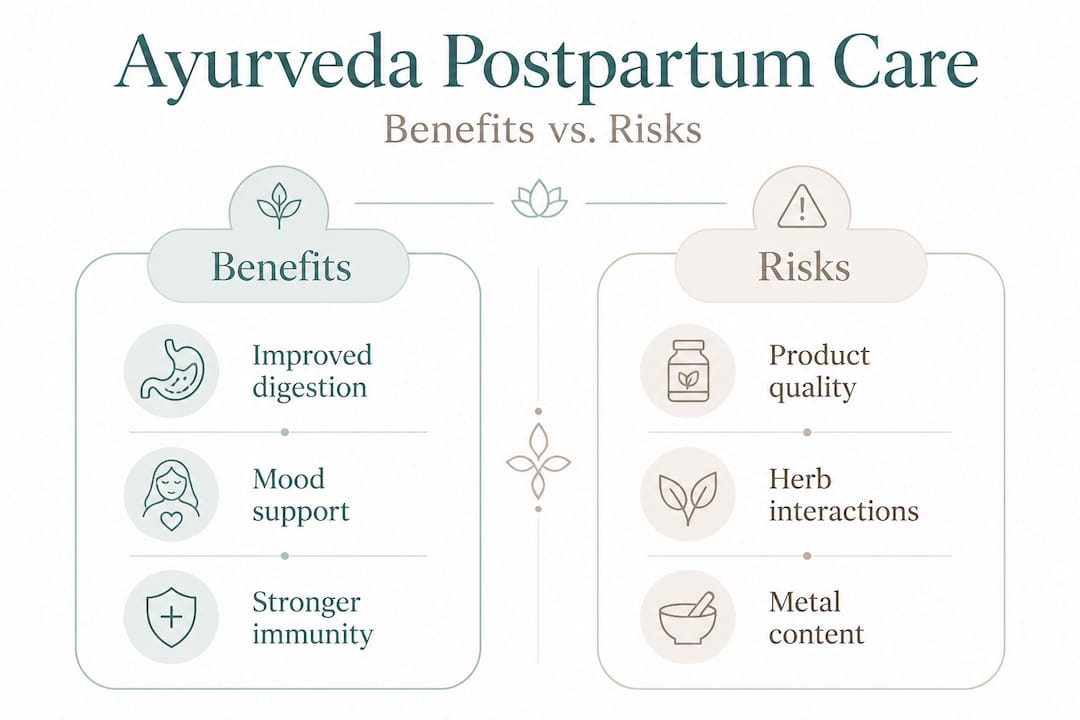
Proponents report benefits including improved digestion, mood support, better sleep quality, and stronger immunity in the postpartum window. That said, modern obstetrics research notes that while Ayurveda shows promise, more whole-person studies are still needed. Our postpartum herbs guide is a helpful companion if you want to explore specific plants used in Ayurvedic recovery.
Pro Tip: Don’t start Ayurveda with supplements. Start with food and routine changes. These carry the least risk and often the most immediate comfort.
What does the evidence say about Ayurveda and postpartum health?
Let’s be honest with you: the research on Ayurveda and postpartum recovery is still catching up to the tradition’s long history. Here’s what we know right now.
The strongest clinical evidence relates to yoga, which is one component of Ayurvedic lifestyle practice. Randomized controlled trials show that prenatal and postnatal yoga reduces labor pain, lowers cesarean section rates, and improves overall maternal outcomes. That’s meaningful data worth paying attention to.
When it comes to Ayurveda as a complete system, including diet, massage, and herbs, the evidence is more limited. Studies suggest it may support digestion and immunity in the postpartum period, but specific randomized controlled trials (RCTs) focused on postpartum Ayurveda are still sparse. The NCCIH strategic framework specifically calls for more robust RCTs to establish reliable benchmarks for these practices.
Here’s a quick breakdown of where the science stands:
| Ayurvedic practice | Current evidence level | What it may support |
|---|---|---|
| Postnatal yoga | Strong (multiple RCTs) | Pain reduction, stress relief, mood |
| Warm nourishing diet | Moderate (observational) | Digestion, energy, milk supply |
| Abhyanga (self-massage) | Emerging | Relaxation, circulation, skin health |
| Herbal supplements | Limited/mixed | Varies widely by herb |
| Mindfulness/meditation | Moderate | Anxiety, emotional resilience |
“Integration of yoga into prenatal and postnatal care has shown promising results for pain and stress reduction, and further RCTs are encouraged to build the evidence base for Ayurvedic practice as a whole.” — Ayurveda for Modern Obstetrics, 2021
You can learn more about building a recovery plan around these practices through our holistic postpartum support page and our postpartum recovery essentials guide.
Potential benefits and real risks: what new moms need to know
Ayurveda offers real possibilities for postpartum healing. But being informed means looking clearly at both sides.
Possible benefits include:
- Improved gut health and regularity through warm, cooked, easy-to-digest foods
- Emotional grounding through structured daily routines (dinacharya)
- Reduced muscle tension and improved circulation through abhyanga (warm oil self-massage)
- Increased sense of calm from mindfulness and breathing practices
- Community connection and cultural continuity for families with South Asian roots
Risks you must take seriously:
This is where we want you to slow down and read carefully. Not all Ayurvedic products are created equal. Research published in peer-reviewed literature flags serious safety concerns around some Ayurvedic products, including contamination with heavy metals like lead, undisclosed glucocorticoids (steroid-like substances), and ingredients that can cause hormonal disruption or toxicity. These are not minor concerns, especially when you’re nursing.

| Area | Benefit potential | Risk level |
|---|---|---|
| Ayurvedic diet (whole foods) | High | Very low |
| Abhyanga with food-grade oils | Moderate to high | Low (check for allergies) |
| Yoga and meditation | High | Low when done gently |
| Commercially sold herbal blends | Varies | Moderate to high |
| Imported herbal supplements | Varies | High without lab verification |
Pro Tip: When choosing any Ayurvedic product, look for third-party testing certification and ask your provider to review the ingredient list. Never purchase herbal supplements from unverified online sources.
Always use Ayurveda as a complement alongside your medical care, never as a substitute for it. Your postpartum checkups matter. Complications like postpartum hemorrhage, infection, and severe mood disorders require prompt medical attention. Before adding anything new to your routine, check out resources on safe herbs for postpartum and talk to your provider. A solid foundation is key, which is why creating a postpartum care plan is one of the most important steps you can take.
How to apply Ayurveda safely in postpartum recovery
Ready to explore what might actually work for you? Here is a practical, step-by-step approach grounded in both Ayurvedic tradition and good sense.
-
Start with warm, nourishing meals. Think soups, stews, oatmeal with ghee, and lentil dishes. These foods are gentle on digestion and restorative after birth. This is the lowest-risk and often most impactful starting point.
-
Try abhyanga two to three times a week. Use warm sesame or coconut oil to gently massage your arms, legs, and belly. Even ten minutes can help with circulation and emotional grounding. Make sure you’re at least a few weeks postpartum before starting, especially after a cesarean.
-
Establish a gentle morning routine. Waking at a consistent time, drinking warm water, and practicing five minutes of breathwork or meditation can bring a surprising sense of stability to chaotic newborn days.
-
Add yoga gradually. Start with gentle, restorative postures once your provider clears you for movement. Even slow stretching reduces cortisol (the stress hormone) and supports mood.
-
Consult before adding herbs. If you’re curious about herbs like shatavari or ashwagandha, bring them up with your midwife or OB first. Describe any supplements you’re considering clearly. Research confirms Ayurveda’s complementary role, not a standalone one, especially in the early weeks postpartum.
-
Know your red flags. If you experience unusual fatigue, skin reactions, mood changes, or any symptoms that feel “off” after starting a new practice, pause and check with your care team.
Philadelphia’s health landscape is wonderfully diverse, with integrative medicine providers, lactation consultants, and doulas who understand both conventional and holistic approaches. Our holistic healing tips can help you build a daily rhythm that feels both supportive and sustainable.
Why holistic postpartum care should be about blending, never replacing, modern medicine
Here is something we believe deeply, and it comes from working closely with Philadelphia families at every stage of the postpartum journey. Ayurveda is beautiful, meaningful, and genuinely supportive when used thoughtfully. But we’ve also seen what happens when the line between complement and substitute gets blurred.
Some moms delay seeking care for postpartum depression because they’re trying herbal remedies first. Others skip their six-week checkup because they feel “healed” through self-care routines. These choices can have real consequences. As safety research clearly states, Ayurveda is not a substitute for medical care, and postpartum complications require prompt, conventional attention.
What we find works best is a genuinely blended approach. Use warm meals and abhyanga to feel more grounded at home. Use your doctor or midwife to screen for physical complications. Use a doula to hold the emotional and practical space in between. Use yoga to rebuild strength gently. None of these things compete with each other. They build on each other.
The most resilient recoveries we’ve witnessed come from moms who honored both their traditional roots and their medical needs without apology. That is the heart of a holistic postpartum recovery guide: not choosing one world over another, but letting both support you at once.
Get personalized support for postpartum healing in Philadelphia
Navigating Ayurveda, evidence-based care, and the emotional landscape of new motherhood is a lot to carry alone. You don’t have to figure it out from scratch.

At Serenity Doula, we offer holistic doula support designed to meet you exactly where you are, whether you’re drawn to Ayurvedic practices, looking for evidence-based postpartum care, or simply need a steady, knowledgeable presence by your side. Our postpartum doula services help you create a recovery plan that honors both your values and your health. Not sure where to begin? Learn more about what a postpartum doula does and how that support might be exactly what your recovery needs.
Frequently asked questions
Is Ayurveda safe for postpartum recovery?
Ayurveda can be safe when used as a complement to medical care, but some products carry risks including heavy metal contamination, so always consult your provider and choose reputable, third-party-tested sources.
What are safe ways to try Ayurveda after birth?
Start with self-care practices like warm nourishing meals, abhyanga oil massage, and gentle yoga before exploring supplements, as these carry the least risk and align with what current research supports most clearly.
Are there any proven benefits of Ayurveda for postpartum mothers?
Some benefits like improved digestion and emotional grounding are widely reported, but empirical benchmarks remain sparse and more focused RCTs on postpartum Ayurveda are still needed.
Can Ayurvedic herbs interact with medications?
Yes, some herbs can interact with medications or contain undisclosed substances that affect your hormones or organ function, so always share a full list of any supplements with your healthcare provider before starting.