

Most expectant parents trust that handing control to medical professionals means the safest birth. That belief is understandable. But research is now telling a different story. Studies show that when families are actively involved, when you have a doula by your side and continuity of care throughout, outcomes genuinely improve. We’re talking shorter hospital stays, better breastfeeding rates, and higher parental satisfaction. This guide walks you through the evidence behind family-centered birth, explains what it looks like in practice, and shows you how families in Pennsylvania and New Jersey are already experiencing these benefits firsthand.
Table of Contents
- What is family-centered birth?
- Key benefits of family-centered birth for families and infants
- Doula and midwife support: Why continuity and partnership matter
- Family-centered cesarean: Extending benefits to surgical births
- The real value of family-centered birth: What most guides don’t tell you
- Take the next step: Personalized birth support for your family
- Frequently asked questions
Key Takeaways
| Point | Details |
|---|---|
| Family involvement boosts outcomes | Parents who participate actively in birth see more satisfaction and healthier infants. |
| Doula support makes a difference | Continuous support from doulas lowers risks for preterm birth and enhances family experience. |
| Cesarean births can be family-centered | Even surgical deliveries allow for more parental involvement and better bonding. |
| Benefits are greatest for vulnerable groups | Marginalized and low-income families see the most dramatic improvements from holistic, family-centered care. |
| Local options are expanding | Pennsylvania and New Jersey parents have growing access to family-centered providers and support services. |
What is family-centered birth?
Family-centered birth is an approach to childbirth that puts you and your family at the center of every decision. It’s not about ignoring medical expertise. It’s about partnering with your care team so that your values, preferences, and emotional needs shape the experience alongside clinical best practices.
At its core, family-centered birth includes four key elements:
- Partnership in care: You and your support people are active participants, not passive observers.
- Tailored support: Your care team adapts to your specific needs, culture, and birth goals.
- Ongoing information sharing: You receive clear, honest explanations at every stage so you can make informed choices.
- Health system flexibility: Hospitals and birth centers adjust policies to welcome family involvement rather than restrict it.
This stands in contrast to the traditional model, where clinical staff largely direct the process and family members often wait in the hallway or stay quietly in the corner. Traditional care prioritizes efficiency and safety metrics, which matter deeply. But it can sometimes leave parents feeling sidelined during one of the most significant moments of their lives.
“Family-centered birth, incorporating family involvement, doula support, and continuity of care, leads to improved parental satisfaction, shorter infant length of stay, better feeding and growth, and reduced hospital readmissions, particularly for preterm infants.”
In Pennsylvania and New Jersey, more families are seeking this approach every year. Local birth centers and hospital labor units are expanding options for midwife-assisted births, home births, and doula-supported deliveries. The demand reflects a broader cultural shift: parents want to feel grounded and informed, not just managed.
If you’re curious about what doulas do within this model, the role goes far beyond hand-holding. Doulas provide continuous emotional and physical support, help you communicate with your care team, and serve as your anchor when everything else feels like a whirlwind.
Family-centered birth doesn’t require a home birth or a specific birth plan. It’s a philosophy that can be applied in any setting, from a hospital delivery room in Philadelphia to a birth center in South Jersey, as long as your care team is on board.
Key benefits of family-centered birth for families and infants
Now that you know what family-centered birth means, see the distinct advantages it brings for you and your baby.
The evidence is clear and encouraging. Family-centered care leads to improved parental satisfaction, shorter infant length of stay, better feeding and growth, and reduced hospital readmissions. These aren’t small improvements. They represent meaningful differences in how you and your baby start life together.
Here’s a breakdown of the main benefits:
| Benefit area | What the research shows |
|---|---|
| Infant feeding | Higher rates of exclusive breastfeeding at discharge and follow-up |
| Hospital stay length | Shorter stays for both mothers and infants, especially preterm |
| Readmissions | Fewer emergency returns to the hospital after discharge |
| Parental satisfaction | Consistently higher scores across diverse family groups |
| Stress and anxiety | Lower maternal anxiety during labor and postpartum |
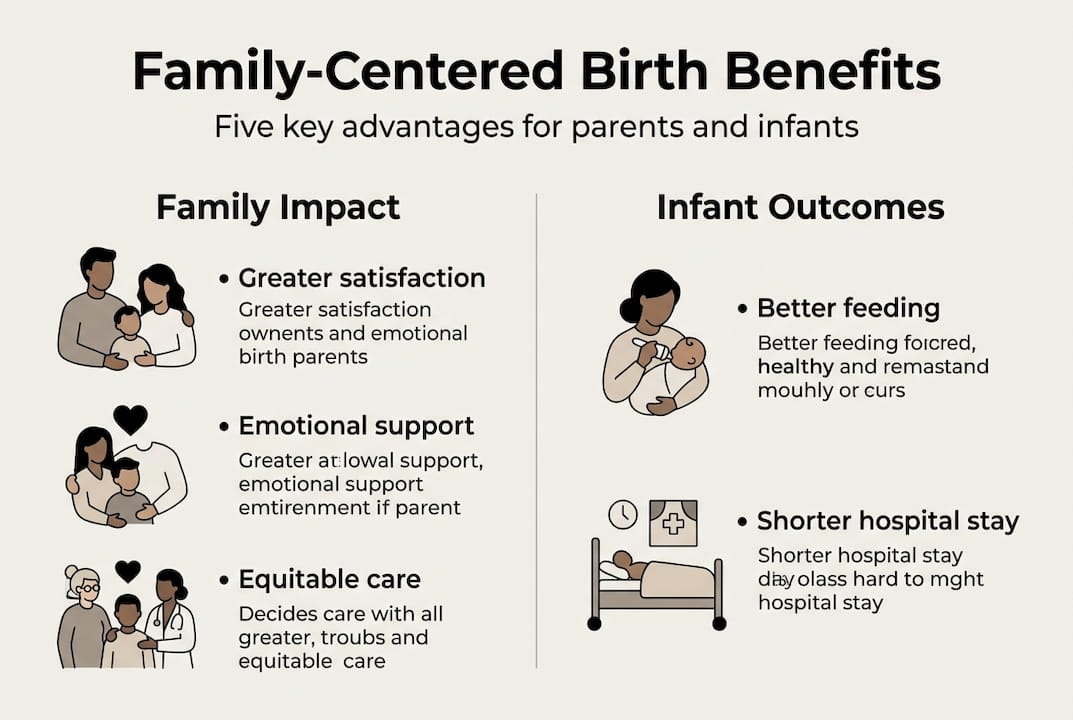
The emotional benefits are just as real as the physical ones. When you feel heard, supported, and informed, your body responds. Lower stress during labor can support better progress and reduce the need for interventions. That’s not wishful thinking. That’s physiology.
For preterm infants especially, family involvement in the NICU (neonatal intensive care unit) makes a measurable difference. Earlier skin-to-skin contact supports temperature regulation, weight gain, and bonding. Parents who are welcomed into care rather than kept at a distance report feeling more confident and less helpless during a frightening time.
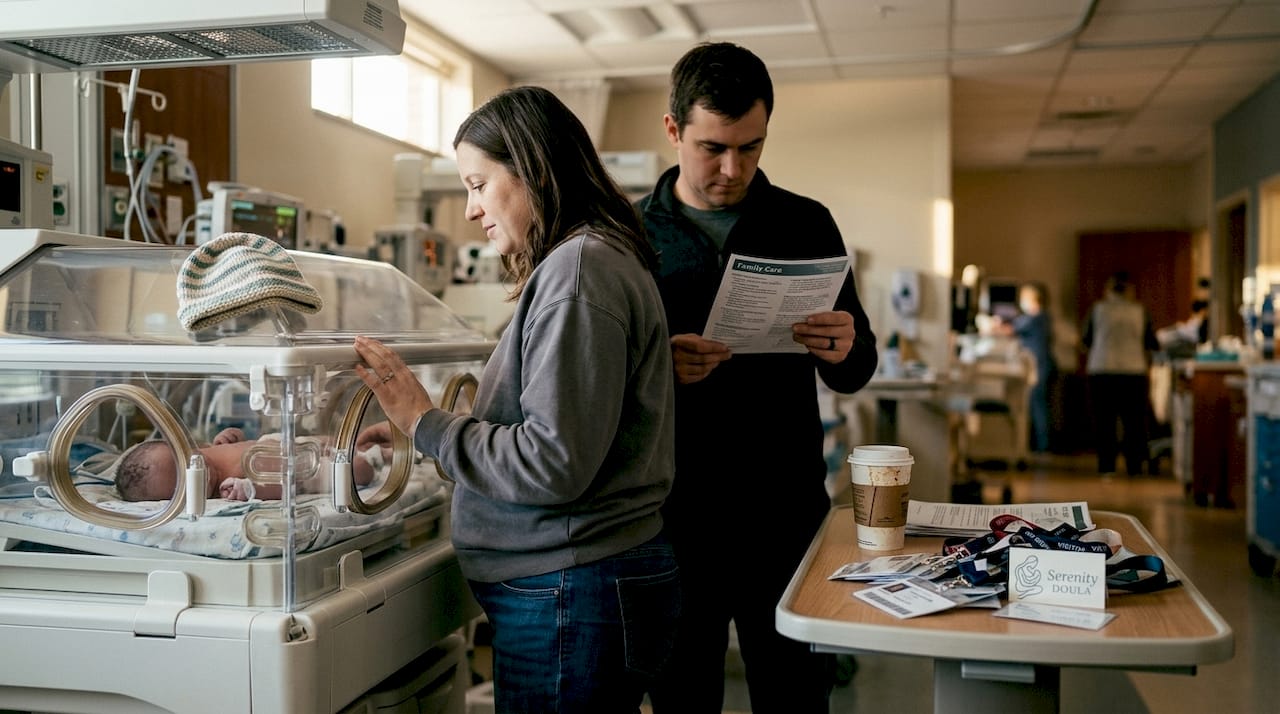
Equity matters here too. Families from low-income backgrounds and minority communities often face the greatest barriers to quality maternity care. Family-centered approaches, particularly when paired with doula support, show amplified benefits for these groups. Learning about childbirth education benefits is one practical way to start building that foundation of knowledge and confidence before your due date.
If you want to understand how evidence shapes personalized care decisions, exploring an evidence-based birth framework can help you ask better questions and advocate for yourself effectively. And the support doesn’t stop at delivery. Strong postpartum care support is a natural extension of the family-centered model, helping you recover and thrive in those early weeks.
Doula and midwife support: Why continuity and partnership matter
An important part of family-centered birth is who supports you. Let’s look at why doulas and midwives make a difference.
Continuity of care means having the same trusted person or team with you from pregnancy through birth and beyond. This isn’t just comforting. It’s clinically significant. Midwife-led continuity of care results in higher satisfaction and more positive birth experiences compared to fragmented care models.
Doulas bring something specific to the table. They are not medical providers, but their presence is powerfully protective. In New Jersey, doula support reduces preterm births by 65%, low birthweight by 88%, low-risk cesareans by 16%, and increases exclusive breastfeeding to 64% at three months. Those numbers are striking.
New Jersey has taken meaningful steps to expand access. NJ Medicaid has reimbursed doula services since 2019, and the Nurture NJ initiative is actively working to reduce maternal mortality and improve equity in maternity care across the state. In southeastern Pennsylvania, midwife and home birth services are also growing, giving families more options than ever.
Comparison: Family-centered vs. traditional care
| Feature | Family-centered care | Traditional care |
|---|---|---|
| Care continuity | High, same provider or team | Often fragmented |
| Intervention rates | Lower with doula/midwife support | Higher on average |
| Parental satisfaction | Consistently higher | Variable |
| Family involvement | Encouraged and structured | Limited or informal |
Key qualities to look for in a PA/NJ doula or midwife:
- Experience with your specific birth setting (hospital, birth center, home)
- Familiarity with local hospital policies and staff
- Clear communication style and genuine warmth
- Willingness to support your birth plan without imposing their own agenda
- Knowledge of insurance coverage and Medicaid reimbursement options
Pro Tip: When interviewing a doula, ask how they handle situations where your preferences differ from your provider’s recommendations. Their answer will tell you a lot about how they balance advocacy with collaboration.
For families in Pennsylvania, learning about PA doula support benefits can help you understand what to expect. And when you’re ready to explore your options, pregnancy and birth doula services offer a clear starting point.
Family-centered cesarean: Extending benefits to surgical births
Family-centered care isn’t limited to natural births. Cesarean families benefit as well.
If you’re planning or expecting a cesarean, you might assume that a surgical environment leaves little room for family involvement. That’s a common misconception. Many hospitals in PA and NJ now offer family-centered cesarean options that allow your partner or support person to be present, lower the surgical drape at the moment of birth, and place your baby skin-to-skin on your chest within minutes.
The research backs this up. Family-centered cesarean deliveries enable earlier skin-to-skin contact, on average 11 minutes sooner, and higher maternal satisfaction scores compared to standard cesarean procedures.
“Earlier skin-to-skin contact after cesarean supports bonding, breastfeeding initiation, and maternal emotional wellbeing in the immediate postoperative period.”
Here’s how to request a family-centered cesarean in a PA or NJ hospital:
- Discuss it early. Bring it up at a prenatal appointment well before your due date, not on the day of surgery.
- Put it in writing. Include your preferences in your birth plan and share it with your OB, midwife, and the hospital’s nursing staff.
- Ask specific questions. Find out whether the hospital has a formal family-centered cesarean protocol or if it requires individual provider approval.
- Prepare for variability. Policies differ between hospitals and even between providers at the same hospital. Knowing this ahead of time helps you advocate calmly.
- Bring your doula. Some hospitals allow doulas in the OR. Confirm this in advance and have your doula ready to support you through the process.
It’s worth noting that satisfaction outcomes in cesarean births can vary. Some studies show modest improvements while others show more significant ones. The key is setting realistic expectations and focusing on what you can control. Understanding types of postpartum support available after a cesarean is an important part of that preparation.
The real value of family-centered birth: What most guides don’t tell you
Here’s what we’ve seen working with families across Pennsylvania and New Jersey: the research is only part of the story.
The benefits of family-centered birth vary enormously depending on hospital culture, individual provider attitudes, and how well families are prepared to advocate for themselves. A hospital can have a written family-centered care policy and still deliver a fragmented, impersonal experience if the staff aren’t genuinely invested in it.
This is the uncomfortable truth most guides skip over. Official programs matter, but provider attitudes and your ability to communicate your needs matter just as much. We’ve seen families in well-resourced hospitals feel invisible, and families in smaller birth centers feel completely held and supported.
Vulnerable families face the steepest barriers. Low-income parents, families of color, and those without strong social support often receive less information, less involvement, and less continuity. The personalized birth plans that make the biggest difference are the ones built with full knowledge of your options and a clear sense of your own voice.
Our practical advice: don’t wait for the system to offer you involvement. Ask for it. Build your team intentionally. And know that being informed and empowered is not about being difficult. It’s about being present for your own birth story.
Take the next step: Personalized birth support for your family
Ready to put these insights into practice for your birth journey?
The best birth experiences we’ve seen share one thing in common: families who came prepared, felt supported, and had the right people in their corner. That’s exactly what we’re here to help you build.
At Serenity Doula, we offer explore doula support tailored to your specific birth goals, whether you’re planning a natural birth, a medicated delivery, or a cesarean. Our childbirth education classes give you the knowledge and confidence to navigate any birth setting. And if you’re still weighing your options, learning about the benefits of childbirth education is a great place to start. Reach out today and let’s talk about what family-centered support looks like for you.
Frequently asked questions
How does family-centered birth affect infant health outcomes?
Family-centered birth improves infant feeding, supports better growth, and reduces hospital readmissions, with the strongest effects seen in preterm infants whose families are actively involved in care.
Are doulas and midwives covered by insurance in Pennsylvania or New Jersey?
NJ Medicaid reimburses doulas since 2019 through the Nurture NJ initiative, and some private plans in both PA and NJ cover midwife and doula services, though coverage varies by plan and provider.
Can I have a family-centered birth with a cesarean delivery?
Yes. Many hospitals in PA and NJ offer family-centered cesarean options that allow earlier skin-to-skin contact and partner presence in the operating room, though availability depends on your hospital and provider.
Are there special benefits for vulnerable families with family-centered care?
Vulnerable groups including low-income families and families of color see stronger doula-supported outcomes, including significantly lower rates of preterm birth and low birthweight.
How do I find a provider for family-centered birth in PA or NJ?
Look for hospitals, birth centers, or homebirth midwives that explicitly support family involvement and continuous care, and ask directly about their policies on doulas, birth plans, and skin-to-skin contact during your first consultation.