

Protecting your peace during pregnancy comes down to three things working together: firm boundaries with your time and attention, a short daily self-care routine you actually keep, and evidence-backed supports like mindfulness or therapy when worry starts running the show. None of this requires overhauling your life. It requires a handful of specific, repeatable choices.
Start today with these:
- Set one tech boundary. A phone-free hour after dinner counts.
- Block 10 to 15 minutes daily for a reset. Same time, every day, non-negotiable.
- Choose one mindfulness tool. A single app or breathing technique, used consistently, beats five you never open.
- Ask your provider about routine mental health screening at your next visit.
- Name one task to hand off to your partner or a family member this week.
More than one in five pregnant people experience a perinatal mental health condition, which makes anxiety and low mood some of the most common complications of pregnancy, not rare exceptions. Screening for it is now a routine part of prenatal care, and getting support is not a sign that anything is wrong with you.
Key Takeaways
Protecting your peace during pregnancy requires boundary-setting, a short daily reset routine, and evidence-backed supports like mindfulness or therapy used consistently.
| Point | Details |
|---|---|
| Set boundaries early | Use direct, polite scripts with visitors and family to protect your time and energy. |
| Build a daily reset | Commit to 10 to 15 minutes of mindfulness or breathing at the same time each day. |
| Mindfulness leads the evidence | A network meta-analysis of 101 trials found mindfulness ranked highest for reducing anxiety symptoms. |
| Screening is routine, not alarming | ACOG recommends screening at your initial visit, later in pregnancy, and postpartum. |
| Delegate specific tasks | Ask your partner for concrete help, like grocery runs or appointment scheduling, not vague support. |
| Serenity Doula offers hands-on support | Prenatal emotional support and childbirth education help translate these strategies into your daily life. |
Table of Contents
- Practical Strategies to Protect Your Peace During Pregnancy
- What Evidence-Backed Techniques Actually Help?
- When Should You Reach Out for Professional Help?
- What Serenity Doula Clients Have Learned About Protecting Their Peace
- Why Most Pregnancy Anxiety Advice Misses the Point
- How Serenity Doula Helps You Stay Grounded Through Pregnancy
- Where to Learn More About Perinatal Mental Health
- Sources
- FAQ
Practical Strategies to Protect Your Peace During Pregnancy
Most of what disrupts pregnancy peace isn’t dramatic. It’s the accumulation of small intrusions: the coworker who insists on describing her friend’s 40-hour labor, the group text that won’t stop buzzing, the well-meaning aunt who calls three times a week to ask if you’re “still pregnant.” Protecting your peace during pregnancy means getting specific about what you’ll allow in and what you won’t.
Boundaries with visitors and conversations
You don’t owe anyone a detailed birth plan or an invitation to touch your belly. Try these scripts:
- “I love that you’re excited, but I’m not sharing birth details right now. I’ll let you know when baby’s here.”
- “We’re keeping visits short this trimester. Would a quick coffee work instead of a full afternoon?”
- “I’m taking a break from pregnancy stories for a while. Tell me about your week instead.”
Tech hygiene that actually reduces anxiety
Pregnancy forums and symptom-search spirals are a documented anxiety trigger, and the fix is structural, not willpower-based. Set a do-not-disturb window (many people choose 8 p.m. to 8 a.m.), unfollow accounts that leave you comparing or afraid, and if a particular forum sends your heart rate up every time you open it, mute it. You can always rejoin later.
A daily self-care template that fits real life
- Sleep buffer: Protect 30 minutes before bed with no screens.
- Gentle movement: A 15 to 20 minute walk or prenatal stretch.
- Mindfulness or breathing: 10 to 15 minutes, same time daily.
- Scheduled worry time: 10 minutes to write down what’s bothering you, then close the notebook.
- Three small pleasures: A favorite song, a warm shower, five minutes with a good book.
Asking your partner for concrete help
Vague requests (“I need more support”) rarely land. Specific ones do. Ask your partner to take over grocery runs, handle scheduling for prenatal appointments, or manage nighttime bottle prep once baby arrives. Naming the task removes the guesswork on both sides.

Pro Tip: Keep a running list on your phone titled “Ask For Help.” Every time you catch yourself thinking “I wish someone would just handle this,” add it. Review it with your partner weekly.
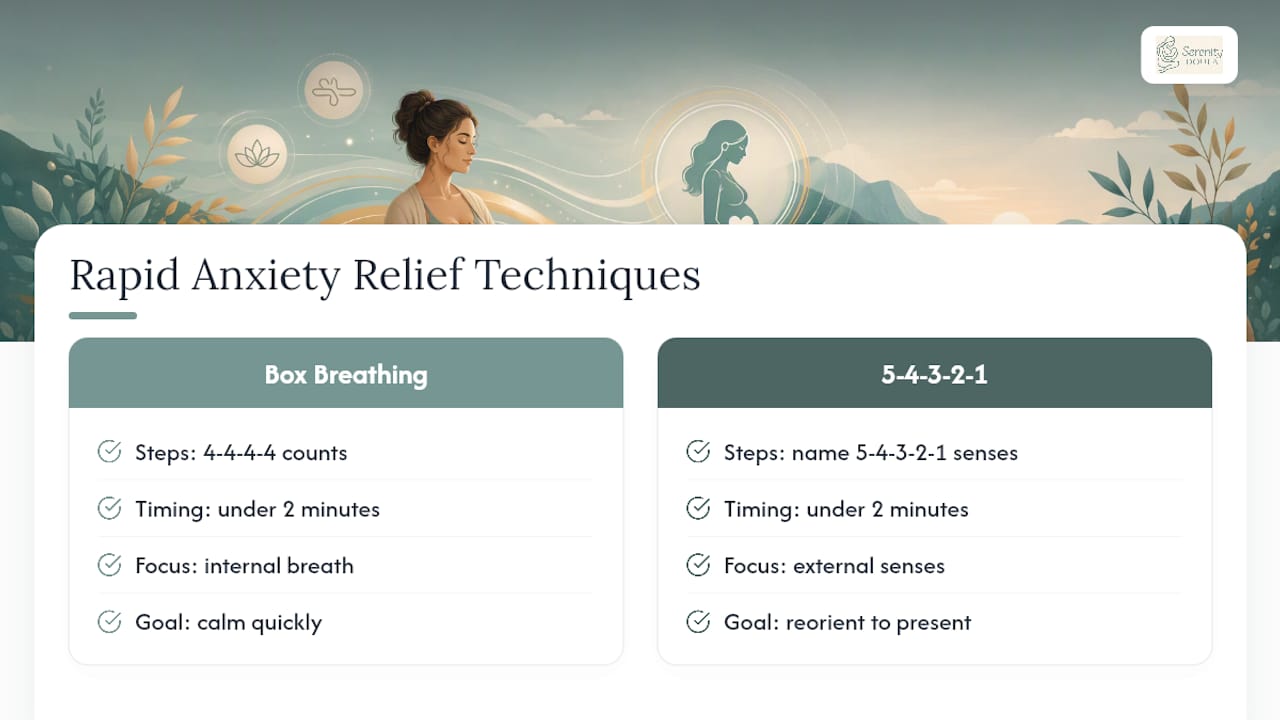
When anxiety spikes in the moment, two tools work fast: box breathing (inhale four counts, hold four, exhale four, hold four) and the 5-4-3-2-1 grounding technique, where you name five things you see, four you can touch, three you hear, two you smell, and one you taste. Both take under two minutes and need no equipment.
What Evidence-Backed Techniques Actually Help?
Mindfulness comes out ahead of most other nonpharmacologic options. A network meta-analysis of 101 randomized trials found mindfulness therapy often ranked highest for reducing depressive and anxiety symptoms in pregnant women, with cognitive behavioral therapy and mind-body exercise like prenatal yoga also showing meaningful benefit. Mindfulness practice has also been linked to lower cortisol and reduced physiological stress markers, supporting why it consistently appears beneficial in research.
None of these require a retreat or a special certification to access:
- Mindfulness: A free 5 to 10 minute guided meditation app session, done daily, builds the habit faster than one long weekend attempt.
- CBT: Ask your OB or midwife for a referral to a perinatal-specialized therapist; many practices now have one on staff or a trusted referral list.
- Mind-body exercise: A prenatal yoga class, in person or on video, combines movement with breath work.
- Group support: Childbirth education classes double as informal peer support, which matters more than people expect.
Medication is sometimes appropriate for anxiety in pregnancy, and that decision belongs in a conversation with your provider, never a solo one. MotherToBaby’s guidance is clear that stopping a prescribed medication without medical input can bring symptoms back, so any change goes through your clinician first.
When Should You Reach Out for Professional Help?
ACOG recommends screening for depression and anxiety at your initial prenatal visit, again later in pregnancy, and at your postpartum visit, using validated tools like the EPDS, PHQ-9, or GAD-7. This is standard care, not a special referral triggered by concern.
Some symptoms need attention right away, not at your next scheduled visit:
- Intrusive thoughts about harming yourself or the baby
- Anxiety or low mood severe enough that you can’t function day to day
- Any thoughts of suicide
If any of these apply, call your provider or go to the nearest emergency room immediately. The 988 Suicide and Crisis Lifeline is available by call or text, any time.
Asking for help can be as simple as this:
Ask that your screening results get documented in your chart so there’s a clear record for follow-up.
What Serenity Doula Clients Have Learned About Protecting Their Peace
Boundaries sound easy on paper and feel awkward in practice. Two lines that work well: “We’re not doing hospital visits the first week, but we’ll send photos,” and “I need to end this call, I’m doing my reset time now.”
A nightly reset that clients find sustainable includes small self-care rituals that make you feel good, such as using a self tanner during pregnancy if desired.
- 10 minutes of worry time, written down and closed
- A gentle stretch or two
- Phones off 30 minutes before bed
- A calming ritual (tea, a favorite playlist, a warm shower)
- A consistent sleep cue, like the same lamp or the same few pages of a book
One client came to us convinced she needed to fix her anxiety before her third trimester even started. What actually helped was smaller: a 10-minute worry-time habit and one honest conversation with her partner about nighttime tasks. Another client used a single boundary script with her in-laws and said it changed her whole relationship to visits for the rest of her pregnancy.
If you want more hands-on support building routines like these, prenatal emotional support is one place to start.
Why Most Pregnancy Anxiety Advice Misses the Point
Here’s what the research and years of client conversations both point to: generic advice to “relax” or “stay positive” fails because it skips the boundary work entirely. You cannot meditate your way out of a group text that won’t stop or a mother-in-law who calls during your nap. The evidence favoring mindfulness is real, but it works best once you’ve actually protected the time to practice it.

Conventional wisdom also treats emotional shifts in pregnancy as something to push through alone. That’s backwards. Hormonal changes affect mood in ways that are well documented and not a character flaw, and asking for structured, evidence-based support, whether that’s a therapist, a childbirth education class, or a doula, is a sign of good judgment, not weakness.
What I’d prioritize first, if you only do one thing: pick your daily 10 to 15 minute reset and protect it like an appointment. Everything else, from boundary scripts to therapy referrals, gets easier once that one habit is in place.
— Alexis Wallace
How Serenity Doula Helps You Stay Grounded Through Pregnancy
Serenity Doula gives Bucks County families something a therapist visit or a meditation app can’t: a person who shows up for your specific pregnancy, knows your history by your third meeting, and helps carry the practical load that fuels most of the anxiety in the first place.
Prenatal emotional support sessions build the boundary scripts, daily routines, and coping tools this article covers, tailored to your actual life rather than a generic template. Childbirth education classes reduce the fear of the unknown that drives so much third-trimester worry, and partner coaching means the person beside you knows exactly how to help instead of guessing. Postpartum support extends that same calm into the fourth trimester, when peace often gets hardest to protect. This is complementary care. For any clinical concern, your OB or midwife remains your first call.
If you’re in Newtown, Doylestown, or anywhere across Bucks County, including families delivering at Trinity Health St. Contact Mary, book a free consultation to talk through what your pregnancy actually needs.
Where to Learn More About Perinatal Mental Health
- ACOG: Addressing Perinatal Mental Health Conditions
- ACOG Screening Guidance
- MotherToBaby Anxiety Fact Sheet
- Network Meta-Analysis on Nonpharmacologic Interventions
- Harvard Health: Managing Anxiety During Pregnancy
This article is general information, not a substitute for advice from a qualified doctor. Consult a qualified healthcare professional about your own circumstances before acting on anything here.
Sources
- Addressing Perinatal Mental Health Conditions in Obstetric Settings | ACOG
- Anxiety – MotherToBaby | Fact Sheets – NCBI Bookshelf
- Effects of non-pharmacological interventions on depressive and anxiety symptoms in pregnant women: a systematic review and network meta-analysis
- ACOG screening guidance: Screening and diagnosis of mental health conditions during pregnancy and postpartum
- How can you manage anxiety during pregnancy? — Harvard Health Blog
FAQ
What are the do’s and don’ts for staying calm during pregnancy?
Do set boundaries around visitors and tech, keep a short daily mindfulness or movement routine, and talk to your provider about screening. Don’t isolate yourself, skip sleep to please others, or stop a prescribed medication without your clinician’s guidance.
What are some positive thoughts to use during pregnancy?
Simple, believable phrases work better than forced positivity, things like “I can ask for help” or “This feeling is temporary” tend to land more honestly than “everything is perfect.”
How can I cope with stress during pregnancy?
Combine a daily 10 to 15 minute mindfulness or breathing practice with scheduled worry time, gentle movement, and specific requests for help from your partner; Harvard Health recommends these alongside consistent sleep routines.
Is it normal to feel more emotional early in pregnancy?
Yes. Hormonal shifts in early pregnancy commonly affect mood, and this is well recognized in perinatal care; if emotions feel unmanageable or persistent, mention it at your next prenatal visit since screening is a routine part of care.
When should I talk to my provider about anxiety in pregnancy?
Bring it up at any visit, but especially your initial prenatal appointment and later in pregnancy when ACOG-recommended screening typically occurs; reach out immediately if you experience intrusive thoughts of harm or suicidal thoughts.