

TL;DR:
- A doula provides emotional, physical, and educational support during pregnancy, birth, and postpartum. Their care is linked to better health outcomes and helps families feel supported throughout the transition to parenthood.
A doula is a trained, nonclinical support professional who provides continuous emotional, physical, and educational care to families through pregnancy, birth, and postpartum transitions. The doula role during family transitions is one of the most evidence-backed forms of perinatal support available. A 2026 systematic review confirms that doula care correlates with lower cesarean delivery rates and higher breastfeeding initiation. The American College of Obstetricians and Gynecologists and DONA International both endorse doula care as a meaningful part of mainstream maternal health. Serenity Doula brings this evidence-based, high-touch support directly to Bucks County families.
What is the doula role during family transitions?
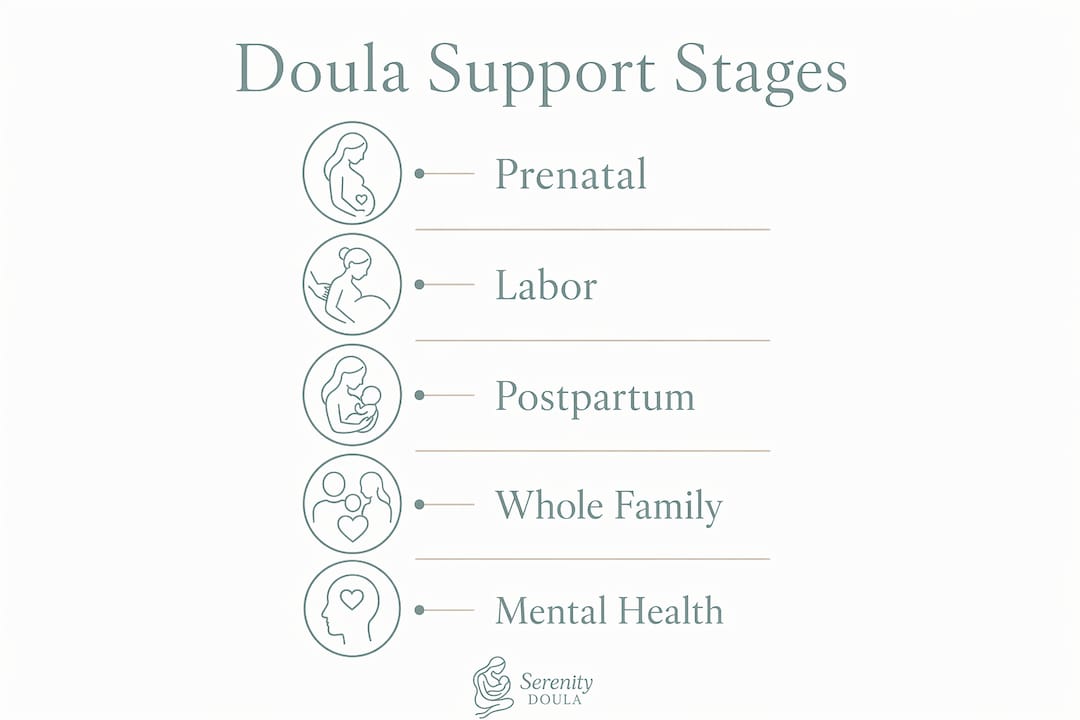
Doulas serve families across three distinct phases: prenatal, labor, and postpartum. Each phase carries its own emotional weight, physical demands, and practical challenges. A doula does not replace your doctor, midwife, or partner. Instead, she fills the human gap that clinical care cannot cover.
The ACOG-endorsed role of doulas is now increasingly recognized by Medicaid programs across the country. That institutional shift reflects what families have known for decades. Having a consistent, knowledgeable person in your corner changes the entire experience of becoming a parent.
How do doulas support families emotionally during pregnancy and postpartum?
Doulas are often the first people to notice subtle emotional struggles that partners and providers miss. Anxiety, intrusive thoughts, and identity shifts are common during pregnancy and early parenthood. They are also frequently unspoken. A skilled doula creates space for those conversations before they become crises.
Many doulas are now expanding into perinatal mental health coaching, a formal evolution of their traditional role. This training equips them to recognize signs of perinatal mood disorders and connect families with the right resources. It is not therapy, but it is a critical bridge to care.
The emotional support a doula provides also benefits partners directly. According to the American Pregnancy Association, doulas take on practical coaching tasks during labor, which frees partners to focus on emotional connection rather than clinical logistics. That shift matters enormously for the birth experience.
Here is what emotional support from a doula typically looks like in practice:
- Holding space for fears about labor, parenting, or identity changes without judgment
- Helping you and your partner talk openly about expectations before birth
- Recognizing when anxiety crosses into something that needs professional support
- Offering reassurance between prenatal appointments when worries tend to spike
- Coaching breathing and grounding techniques during stressful moments
Pro Tip: Ask your doula during your first meeting how she handles moments when a client feels scared or overwhelmed. Her answer will tell you a great deal about her emotional intelligence and communication style.
In what ways do doulas provide physical and practical support during birth and postpartum?
Physical support during labor is one of the most visible parts of a doula’s work. Nonclinical techniques like breathing guidance, massage, and position changes help manage pain and keep labor progressing. These are not passive gestures. Research consistently links continuous labor support to better outcomes for both parent and baby.
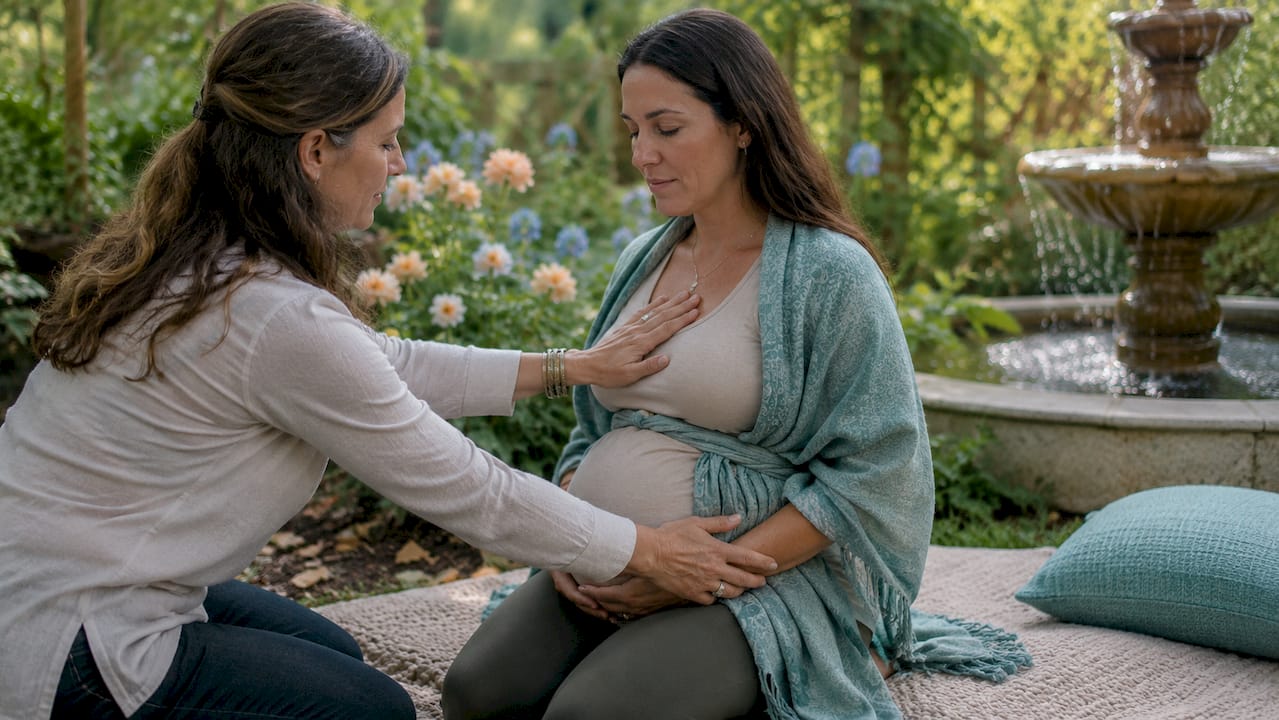
Postpartum support is where the gap in modern healthcare becomes most obvious. Traditional cultures have long practiced structured postpartum rituals to support new mothers. Most American families no longer have access to those community structures. DONA International notes that postpartum doulas fill this gap through nonjudgmental education, hands-on newborn care, and genuine companionship during the most vulnerable weeks of new parenthood.
| Phase | Physical support | Practical support |
|---|---|---|
| Prenatal | Comfort positioning, body mechanics guidance | Birth plan development, provider question prep |
| Labor and birth | Massage, breathing, position changes | Advocacy, communication with care team |
| Postpartum | Feeding support, infant soothing techniques | Light household tasks, newborn care education |
Pro Tip: If you are considering a postpartum doula, book her before your due date. Availability fills quickly in Bucks County, especially for overnight support.
What is the doula’s role in supporting the whole family during these transitions?
A doula supports the entire family unit, not just the birthing parent. Partners, older siblings, and even extended family members all feel the weight of a new baby arriving. A doula helps everyone find their footing.
Doulas do not replace partners. They work alongside them. According to the American Pregnancy Association, when a doula handles practical coaching during labor, partners can be fully emotionally present. That is a gift that changes the memory of birth for everyone in the room. You can read more about this dynamic in Serenity Doula’s partner support guide.
DONA International also emphasizes that quality postpartum support promotes parent-infant bonding and helps families build routines together. That structure matters more than most new parents expect. The first weeks at home are often the hardest, and having someone to guide rather than judge makes a real difference.
Common family support tasks a doula performs include:
- Helping older siblings understand and connect with the new baby
- Guiding partners through newborn care basics like swaddling and soothing
- Offering referrals to lactation consultants, therapists, or pediatricians when needed
- Helping families establish feeding and sleep routines that work for their household
- Providing nonjudgmental education to grandparents and extended family members
Families navigating fertility treatments before pregnancy also benefit from early doula involvement. For those going through IVF, resources like partner support during IVF can complement what a doula provides emotionally, especially for couples managing the stress of assisted reproduction.
How do expert doulas develop intuition and sustain compassionate care over time?
Doula skill is not static. Research from Frontiers in Global Women’s Health describes a clear progression from novice to expert, with advanced doulas developing what researchers call “intuitive knowing.” This is the ability to anticipate a client’s needs before they are spoken, reading the room in real time and adjusting without disrupting the flow of labor or postpartum care.
Expert doulas also develop a strong professional identity. They focus on meeting clients’ moment-to-moment needs rather than following a fixed script. That flexibility is what separates a good doula from a great one. It takes years of births, postpartum visits, and honest self-reflection to build.
Sustainability in doula work is a real and often overlooked challenge. Repeated exposure to medical mistreatment and emotionally intense birth environments takes a toll. Experienced doulas prioritize self-care and boundary setting not as a luxury, but as a professional responsibility. A doula who is burned out cannot give you the presence you deserve.
What I have learned about doulas and family change
After more than a decade supporting Bucks County families through birth and postpartum, I have seen one pattern repeat itself. The families who feel most prepared are not the ones who read every book. They are the ones who had someone genuinely in their corner.
I have watched doula support shift a partner from terrified bystander to confident, present father. I have seen a mother finally say out loud that she was scared, because her doula made it safe to do so. These moments do not show up in clinical outcome data, but they shape families for life.
If you are choosing a doula, look for someone whose values align with yours and who listens more than she talks in that first meeting. The right fit matters as much as credentials. And if you are not sure where to start, Serenity Doula’s doula considerations guide is a good place to begin.
— Alexis Wallace
Serenity Doula is here for your family’s next chapter
Serenity Doula serves expecting and new families across Bucks County, including Newtown, Doylestown, and the surrounding area, with personalized prenatal, birth, and postpartum support.
Whether you are planning a natural birth, a medicated delivery, or a cesarean, Serenity Doula’s pregnancy and birth support is built around your specific needs and values. Every family gets a doula who shows up fully prepared, emotionally present, and genuinely invested in your experience. Book a free consultation today to find out what the right support looks like for you.
Key takeaways
The doula role during family transitions covers emotional, physical, and practical support across prenatal, birth, and postpartum phases, and evidence consistently links that support to better outcomes for the whole family.
| Point | Details |
|---|---|
| Doulas improve outcomes | Research links doula care to lower cesarean rates and higher breastfeeding initiation. |
| Emotional support is core | Doulas identify anxiety and identity shifts early, often before partners or providers notice. |
| Partners benefit too | Doulas take on coaching tasks so partners can stay emotionally present during labor. |
| Postpartum gaps are real | DONA International recognizes doulas as essential for filling the cultural postpartum support gap. |
| Expert doulas grow over time | Advanced doulas develop intuitive knowing and sustain quality care through strong boundaries and self-care. |
Perspective: What 10 years of birth work taught me about family change
The most surprising thing I have learned is how often families underestimate the postpartum period. Everyone prepares for labor. Very few prepare for the weeks after. That is where I see the most need, and where a doula’s presence makes the quietest but most lasting difference.
I also want to say something that does not always get said. Doula support is not a luxury reserved for a certain kind of birth or a certain kind of family. It is for anyone who wants to feel seen, supported, and less alone during one of the biggest transitions of their life.
— Alexis Wallace
FAQ
What does a doula do during family transitions?
A doula provides continuous emotional, physical, and educational support across pregnancy, birth, and postpartum phases. This support improves outcomes and eases the adjustment to new parenthood for the whole family.
How do doulas help partners during labor?
Doulas take on practical coaching tasks during labor, which frees partners to focus on emotional connection rather than clinical logistics, according to the American Pregnancy Association.
Are doulas covered by insurance or Medicaid?
Doula care is increasingly covered by Medicaid programs across the country, following endorsement by the American College of Obstetricians and Gynecologists. Coverage varies by state, so ask your provider what applies in Pennsylvania.
When should I hire a doula?
Most families benefit from connecting with a doula during the second trimester. Early engagement allows time to build trust, develop a birth plan, and prepare emotionally before labor begins.
Can a doula help with postpartum mental health?
Many doulas now train in perinatal behavioral health coaching, which equips them to recognize early signs of postpartum mood disorders and connect families with appropriate professional support.