TL;DR:
- A pregnancy packet can be a clinical paperwork set from your healthcare provider or an educational guide from your support team, each serving different purposes. Starting to review and prepare with your packet around week 28 helps build confidence, reduces stress, and allows for timely planning. Including essential resources like a birth plan, postpartum warning signs, and emotional support information ensures comprehensive readiness for both physical and emotional aspects of pregnancy and postpartum life.
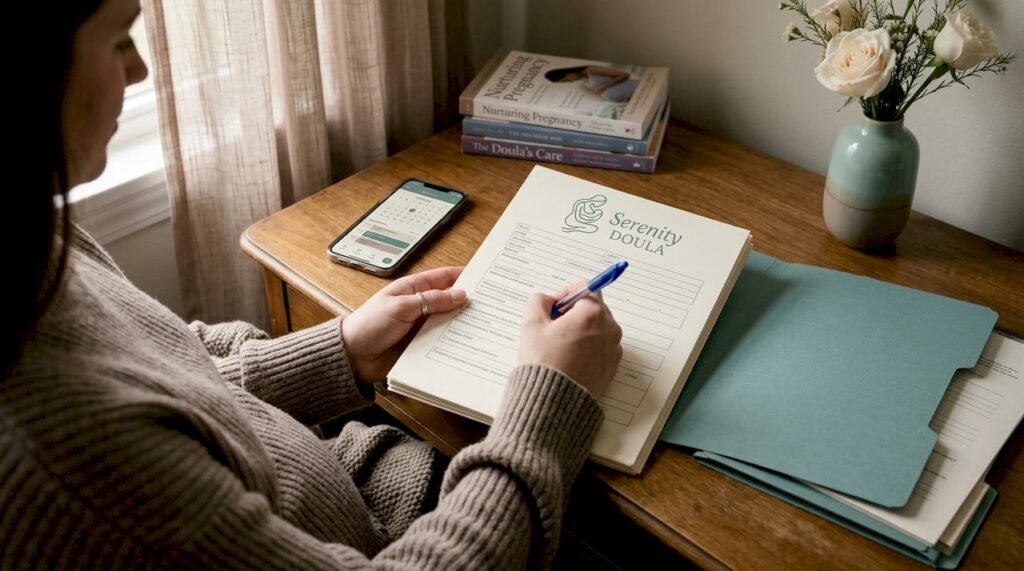
You picked up a pregnancy packet and now you’re wondering what to actually do with it. Maybe it’s a stack of forms from your OB’s office, or maybe it’s a thick folder of guides, checklists, and birth plan templates from your doula or hospital. Here’s the thing: those are two very different things, and knowing which one you have changes everything about how you use it. This guide will walk you through both types, help you figure out what should be inside yours, and give you a clear, calm plan for putting it all to work before your baby arrives.
Table of Contents
- Key takeaways
- What a pregnancy packet actually is
- When to start using your pregnancy packet
- What should be in your pregnancy packet
- How pregnancy packets support your emotional well-being
- My perspective on pregnancy packets
- How Myserenitydoula supports your preparation
- FAQ
Key takeaways
| Point | Details |
|---|---|
| Two distinct packet types | Clinical intake packets handle paperwork; educational packets guide your birth and postpartum journey. |
| Start by week 28 | Beginning preparations at the third trimester gives you time to pace tasks without stress. |
| Postpartum warning signs matter | Keep that warning signs sheet accessible at home. It could save your life in the weeks after birth. |
| Birth plans are collaborative | A birth plan is a conversation starter with your care team, not a fixed contract. |
| Emotional support is part of the packet | Resources for mood changes, fatigue, and mental health belong in every pregnancy packet. |
What a pregnancy packet actually is
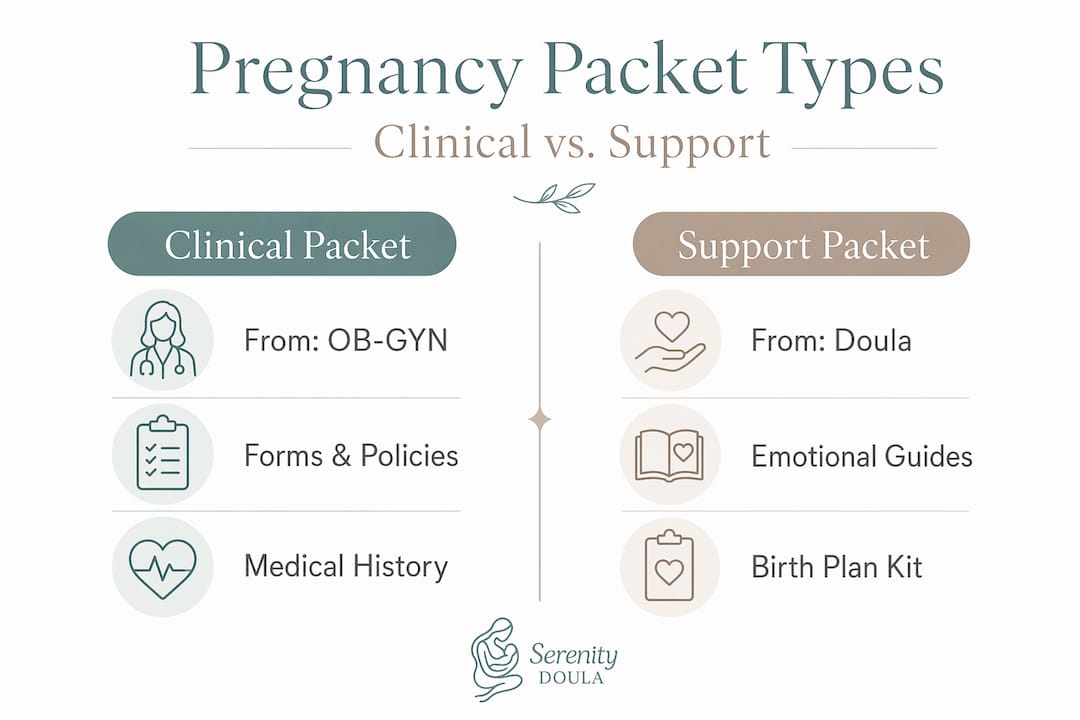
Most expectant parents hear “pregnancy packet” and picture a clipboard of intake forms at the doctor’s office. That image is only half right. As two distinct packet types exist in the pregnancy world, and confusing them is easier than you’d think.
The clinical intake packet comes from your OB-GYN, midwife, or hospital. It includes registration forms, office policies, insurance paperwork, and instructions for your first prenatal visit. This packet is administrative. You fill it out, hand it back, and the office handles the rest.
The educational and support packet is a different animal entirely. This one comes from your doula, childbirth educator, hospital birth center, or a program like the one here at Myserenitydoula. It’s designed to inform and prepare you, not just process you as a patient.
Here’s a quick comparison so you can tell them apart at a glance:
| Feature | Clinical intake packet | Educational/support packet |
|---|---|---|
| Who provides it | OB-GYN, midwife, hospital | Doula, childbirth educator, birth center |
| Main purpose | Administrative registration | Birth and postpartum preparation |
| What’s inside | Forms, policies, consent docs | Birth plans, checklists, postpartum guides |
| How you use it | Fill out and return | Read, reference, and act on over time |
| When you get it | First prenatal visit | Any time during pregnancy |
Both types matter. The intake packet keeps your care organized. The support packet keeps you grounded, informed, and ready.
When to start using your pregnancy packet
Timing is everything here. The sweet spot for diving into your educational pregnancy packet is around week 28, when your third trimester begins. This is also when prenatal visits shift to biweekly, which naturally signals that things are picking up pace. Starting here gives you roughly 10 to 12 weeks to complete key steps without scrambling.
A weekly task-oriented checklist can genuinely ease stress during this time. Here’s a simple milestone timeline to follow:
| Week | Task |
|---|---|
| Week 28 | Start educational packet; review prenatal schedule |
| Week 30 | Draft your birth plan; begin hospital pre-registration |
| Week 32 | Research and purchase car seat; schedule installation check |
| Week 34 | Pack your hospital bag; review labor signs guide |
| Week 36 | Weekly prenatal visits begin; finalize birth plan |
| Week 38-39 | Review postpartum warning signs; confirm your support system |
Working through this week by week, rather than all at once, is what makes preparation feel manageable rather than overwhelming. You can also use the third trimester preparation checklist from Myserenitydoula to layer in self-care and emotional readiness alongside the practical tasks.
Pro Tip: Many parents wait until late third trimester to start these steps, which adds unnecessary stress. Block 20 minutes each week on your calendar starting at week 28 to chip away at one task at a time.
What should be in your pregnancy packet
Whether your packet came from a hospital, a doula, or a childbirth education program, certain pieces should always be there. If yours is missing any of these, it’s worth adding them yourself.
- Prenatal visit schedule. A clear breakdown of how often you’ll be seen and what each visit checks for, so you know what to expect.
- Birth plan template. A starting point to document your preferences for labor, delivery, and immediate newborn care. A birth plan facilitates collaboration with your medical team rather than locking you into one path.
- Labor signs guide. Explains the difference between Braxton Hicks contractions and real labor, and when to call your provider or head to the hospital.
- Hospital bag checklist. The practical list of what to pack for yourself, your partner, and your baby.
- Postpartum warning signs sheet. This one is non-negotiable. Postpartum warning signs include fever of 100.4°F or higher, severe headaches, and heavy bleeding. These require immediate medical attention.
- Newborn care tips. Feeding cues, diapering basics, safe sleep guidelines, and cord care.
- Wellness and support resources. Referrals to lactation consultants, mental health support, and community resources.
The postpartum warning signs sheet often gets tucked to the back and forgotten. Post it on your refrigerator. It is one of the most vital parts of any pregnancy packet for keeping you safe after you come home from the hospital.
Pro Tip: If you’re putting together your own maternity information pack, think of it as a pregnancy survival kit for both birth and the weeks that follow. Include resources for your partner too, so they know how to support you and when to act.

How pregnancy packets support your emotional well-being
Here’s what often gets overlooked in the conversation about what to include in a pregnancy packet: the emotional side of postpartum life deserves just as much attention as the physical recovery.
Postpartum complications can arise up to 12 months after delivery. That’s a long window, and symptoms like persistent fatigue, mood changes, and feelings of disconnection can be easy to dismiss as “just being tired.” Your packet should include resources that help you and your family recognize when something is more than exhaustion.
“The postpartum experience is a significant transition, and symptoms like fatigue and mood changes should be taken seriously, not dismissed as a normal part of new parenthood.” Mayo Clinic experts on postpartum complications
Educational packets from doulas and birth educators often include mental health check-in prompts, partner support guides, and referrals to postpartum counselors. These are the resources that hold you between appointments, especially in the weeks when you feel most alone.
Encourage your partner or support person to read through the emotional wellness sections of your packet too. You don’t have to carry this alone. Resources on how to support your partner during labor can extend naturally into the postpartum phase as well, and having that shared understanding makes a real difference.
If your packet doesn’t include any emotional wellness materials, that’s a gap worth filling with your doula or care provider before your baby arrives.
My perspective on pregnancy packets
I’ve worked with many families through pregnancy, birth, and those tender early weeks postpartum. One pattern I keep seeing is that parents treat the educational pregnancy packet like a brochure. They glance at it, set it on the counter, and forget it’s there.
In my experience, the families who actually use their packets, who fill out the birth plan with intention, who read the postpartum warning signs while they still have energy to absorb the information, those are the families who feel more confident walking into labor. Not because pregnancy becomes predictable, but because they’ve thought things through in advance.
I’ve also seen people wait until week 37 or 38 to look at any of it. That’s not a judgment. Pregnancy is exhausting and life doesn’t slow down. But starting at week 28 makes a real difference. You absorb information better, you have time to ask questions at your prenatal visits, and you’re not rushing to install a car seat at 39 weeks while you’re running on two hours of sleep.
The other thing I’d push back on is the idea that a birth plan is wishful thinking. Yes, birth is unpredictable. But birth plans encourage respectful communication with your care team, and that communication shapes your experience regardless of how your birth unfolds. Use the template. Think it through. Your voice matters in that room.
— Justin
How Myserenitydoula supports your preparation
At Myserenitydoula, we believe every expectant parent deserves more than a packet of paperwork. Our pregnancy and birth support services are designed to complement everything in your pregnancy packet with real, personalized guidance from an experienced doula who has been through this alongside many families. From helping you draft a birth plan that truly reflects your wishes to walking you through postpartum warning signs so nothing catches you off guard, we’re here to make your preparation feel less like homework and more like genuine care. We also offer childbirth education programs that fill in the gaps no packet can fully cover. Reach out to schedule a consultation and start feeling ready.
FAQ
What is a pregnancy packet?
A pregnancy packet is either a set of clinical intake forms from your healthcare provider or an educational and support resource package from a doula or hospital. The two types serve very different purposes, so it helps to know which one you have.
What should be included in a pregnancy packet?
A thorough pregnancy packet should include a prenatal visit schedule, a birth plan template, a labor signs guide, a hospital bag checklist, a postpartum warning signs sheet, and newborn care tips. Emotional wellness resources are also an important addition.
When should I start using my pregnancy packet?
Starting around week 28, when your third trimester begins, gives you enough time to pace your preparation without rushing. This is also when prenatal visits typically increase in frequency, making it a natural moment to shift into active preparation mode.
How long does the postpartum period last?
The postpartum period can extend up to 12 months after delivery. Symptoms like fatigue, mood changes, and physical warning signs such as fever or heavy bleeding should be monitored and reported to your provider throughout that entire window.
Is a birth plan really necessary?
A birth plan is not a requirement, but it is a helpful tool. It gives you a way to communicate your preferences clearly with your care team before and during labor, and research shows it supports more collaborative and respectful communication between you and your providers.