

Screaming during childbirth is one of those topics nobody really prepares you for. You see it in movies, hear about it from friends, and then wonder what it will actually be like for you. The truth is, making noise during labor, whether that’s moaning, crying, or full-on screaming, is a deeply human and instinctive response. It’s not a sign that something is wrong, and it’s not something you need to suppress. What you do need is honest information so you can feel grounded, understood, and ready for whatever your birth looks like.
Table of Contents
- Key takeaways
- Why some people scream during childbirth
- How screaming affects labor progress
- Practical strategies for managing pain and vocalizations
- What to expect in hospitals and birth centers
- My honest take on vocalizing in labor
- How Myserenitydoula supports your voice in labor
- FAQ
Key takeaways
| Point | Details |
|---|---|
| Screaming is instinctive | Vocal responses in labor are driven by your nervous system, not a lack of control. |
| Adrenaline has two sides | Screaming can trigger fight-or-flight, which may slow labor if it becomes excessive. |
| Coping tools change everything | Breathing techniques, coaching, and pain relief options give you real choices in how you respond. |
| Advocacy protects you | Having a doula or birth partner present helps your needs get heard, especially in hospital settings. |
| Preparation builds confidence | Learning about labor sounds and coping strategies before birth reduces fear significantly. |
Why some people scream during childbirth
Labor is intense. There is no softening that truth. When contractions peak, especially during active labor and transition, your body is doing something enormous. Screaming during childbirth is not a performance or an overreaction. It is your nervous system responding to overwhelming physical sensation.
Here is what is actually happening beneath the surface:
- Pain signals flood the brain. During strong contractions, your brain receives a wave of pain input. Screaming activates the same primal pathways used in any survival scenario.
- Fight-or-flight kicks in. Your body may interpret intense pain as a threat, triggering an adrenaline response that makes loud vocal release feel involuntary.
- Emotional pressure builds. Fear, exhaustion, and uncertainty compound physical pain. Vocal expression serves as both an emotional outlet and a way to relieve tension when it feels unbearable.
- Your body seeks release. Much like exhaling sharply when lifting something heavy, screaming channels the physical effort of labor outward.
The giving birth sounds you make are not random. They reflect the specific stage of labor you are in and the intensity of what your body is experiencing. Many people describe their natural childbirth experience as far louder than they expected, and that is completely normal.
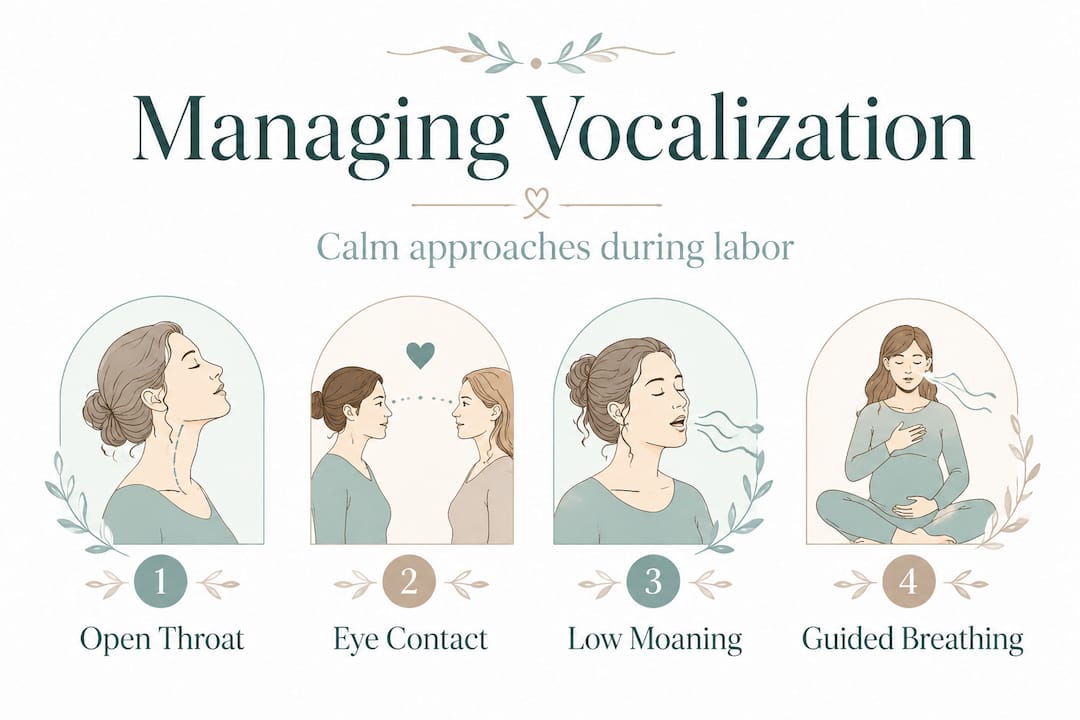
Pro Tip: Try “open throat” sounds like low moaning or humming instead of high-pitched screams. Lower vocalizations tend to keep your jaw and pelvic floor relaxed, which may help labor progress more smoothly.
How screaming affects labor progress
This is where it gets nuanced. Screaming is not simply good or bad for labor. Its effect depends on the type of vocalization and whether fear is driving it.
| Type of vocalization | Potential effect on labor |
|---|---|
| Low moaning or humming | Promotes relaxation; may support cervical opening |
| Controlled breathing with sound | Keeps oxygen flowing; reduces tension |
| High-pitched fear-based screaming | Can activate fight-or-flight, releasing adrenaline that may stall labor |
| Screaming as signal to caregivers | Alerts staff to urgent need; can be misread as “difficult” behavior |
The fight-or-flight response is the key factor here. When your brain perceives extreme danger, it releases adrenaline, which can slow uterine contractions and redirect blood flow away from your uterus. This does not mean you need to suffer in silence. It means that screaming driven by fear is worth addressing with the right support, while vocalization driven by effort or release is often perfectly fine.

How individual labor experiences vary matters too. Some people move through labor with quiet intensity. Others are naturally vocal throughout. Neither approach is superior, and neither should be judged.
Pro Tip: If you feel your vocalizations spiraling into panic, your birth partner or doula can guide you back with eye contact, touch, and a calm low voice. This is one of the most powerful coaching during childbirth tools available.
Practical strategies for managing pain and vocalizations
You have more options than you might think. Birth preparation should build inner confidence and communication skills rather than aiming for a silent birth. Here is how you can prepare for the emotional response to childbirth before it arrives.
Breathing and vocalization techniques:
- Practice slow exhale breathing during Braxton Hicks contractions so it becomes muscle memory.
- Try “horse lips” (loose, fluttery exhales) to soften your face and relax your jaw during peaks.
- Use a low “ahhhh” sound on the exhale to stay connected to your breath instead of holding tension.
- Ask your birth partner to breathe with you audibly so you have something to match.
Pain relief options worth knowing:
- Effective pain relief during labor can include controlled breathing, mobility, warm water therapy, massage, epidural anesthesia, and IV medications, each with real benefits depending on your birth goals.
- Water therapy (laboring in a tub or shower) is particularly effective at reducing the urge to tense up and scream.
- Moving between positions, whether walking, swaying, or kneeling, can shift the pressure from contractions and reduce intensity.
You can also prepare your body and mind before labor begins with targeted practice, which makes a real difference when contractions get serious.
Communicating your needs:
- Tell your care team in advance that you may be vocal and that loud sounds do not mean you are losing control.
- Use a simple signal word or gesture with your birth partner so they know when you need more support versus space.
- Write your preferences in your birth plan so caregivers understand your approach to childbirth coping techniques before labor begins.
What to expect in hospitals and birth centers
Here is something most prenatal classes do not say out loud. How your caregivers respond to your vocal expressions in labor can have real consequences for the care you receive.
Research has shown that patients screaming in hospital labor may be perceived as “out of control,” which can lead some staff to delay assessment or dismiss concerns. In a widely covered 2025 incident, a mother gave birth in a hospital waiting room after waiting over 30 minutes while screaming in pain, with a staff member later fired following public outrage. This is not an isolated story. Black mothers in Texas and Indiana have reported being ignored or denied timely care despite vocal distress, reflecting a broader issue with how vocal pain expression is interpreted in clinical settings.
What you can do to protect yourself:
- Bring a doula or advocate. Doulas guide clients in advocacy and help laboring people feel safe and empowered, particularly when vocalizations are intense.
- State your needs clearly between contractions. A short sentence like “I need you to check me now” is more likely to get a response than screaming alone.
- Ask your partner to speak on your behalf. While you are in the middle of a contraction, your advocate’s calm voice can be the one that gets action.
- Know that your sounds are valid. Advocacy mitigates the real risk of being dismissed for vocal pain expression in clinical environments.
You deserve to be heard, not in spite of your sounds, but because of them.
My honest take on vocalizing in labor
I’ve supported many people through labor, and I want to say this plainly. The goal was never a quiet birth. The goal was always an empowered one.
What I’ve seen again and again is that the laboring people who feel most grounded are not the ones who said nothing. They are the ones who felt permission to respond authentically and had someone beside them helping them channel that energy. High-pitched fear-based screaming is something I work with by helping clients shift their sound lower, their breath slower, and their focus inward. That shift changes everything.
I’ve also seen what happens when someone feels they have to perform calm during labor out of fear of judgment. That disconnection costs them. Birth coaching, coaching for childbirth in particular, is about building the internal authority to say “this is my birth and this is how I am doing it.” That is not a small thing. It is the foundation of a birth experience you can feel at peace with afterward.
— Alexis Wallace
How Myserenitydoula supports your voice in labor

At Myserenitydoula, we believe your voice in labor, whatever sound it takes, deserves respect, not management. Our pregnancy and birth support doula services are built around being genuinely present with you through every contraction, advocating for your needs, and helping you stay connected to yourself when labor gets loud and intense. We also offer childbirth education classes that prepare you for the full emotional and physical reality of birth, including what to expect from your own vocal responses and how to work with them rather than against them. You do not need to go into your birth day hoping for the best. You can go in feeling ready. Reach out to schedule a consultation and let us help you build that confidence.
FAQ
Why do women scream during labor?
Screaming during labor is an instinctive response to intense physical sensation and fear activation. It reflects the nervous system’s natural reaction to overwhelming pain, not a loss of control.
Can screaming slow down labor?
High-pitched fear-based screaming can trigger the fight-or-flight response, releasing adrenaline that may stall contractions. Lower, relaxed vocalizations are less likely to have this effect.
How can I manage the urge to scream during childbirth?
Practicing low exhale breathing, using open-throat sounds, and working with a doula or birth partner can help redirect intense vocal responses into more productive coping techniques.
Will hospital staff judge me for screaming during labor?
Sadly, some staff may misread loud vocalizations as being “difficult,” which is why having an advocate or doula present is one of the most protective steps you can take.
What sounds are normal during natural childbirth?
Moaning, groaning, crying, and screaming are all normal giving birth sounds. The key is whether the sounds reflect fear or effort, since effort-based vocalizations typically support labor progress.