

As your pregnancy progresses, you may wonder when cervix checks begin and what they reveal about your labor readiness. Many expectant mothers feel uncertain about these exams, unsure of the timing or purpose. Cervix checks are a standard part of prenatal care, but when they start varies based on your health, pregnancy risk level, and provider approach. This guide explains when cervix checks typically begin, what they involve, why timing differs among pregnancies, and how to prepare for these appointments. Understanding cervix checks empowers you to make informed decisions and communicate confidently with your healthcare team.
Table of Contents
- Key takeaways
- Understanding cervix checks and their purpose
- When do cervix checks usually start during pregnancy?
- What to expect during a cervix check and how it affects your birth plan
- Risks, benefits, and alternatives to routine cervix checks
- How Serenity Doula supports your pregnancy and birth journey
- When do cervix checks start FAQs
Key Takeaways
| Point | Details |
|---|---|
| What cervix checks measure | A cervix check assesses dilation and effacement, along with cervical position, consistency, and station, to gauge readiness for labor. |
| Typical start timing | For most low risk pregnancies routine cervix checks begin around 36 weeks, with weekly monitoring, though individual plans vary. |
| Early checks criteria | Earlier checks may occur if signs of preterm labor or high risk conditions are present or if symptoms such as bleeding or decreased fetal movement arise. |
| Not a crystal ball | Cervix checks provide a current snapshot of labor progression and do not precisely predict when labor will start. |
Understanding cervix checks and their purpose
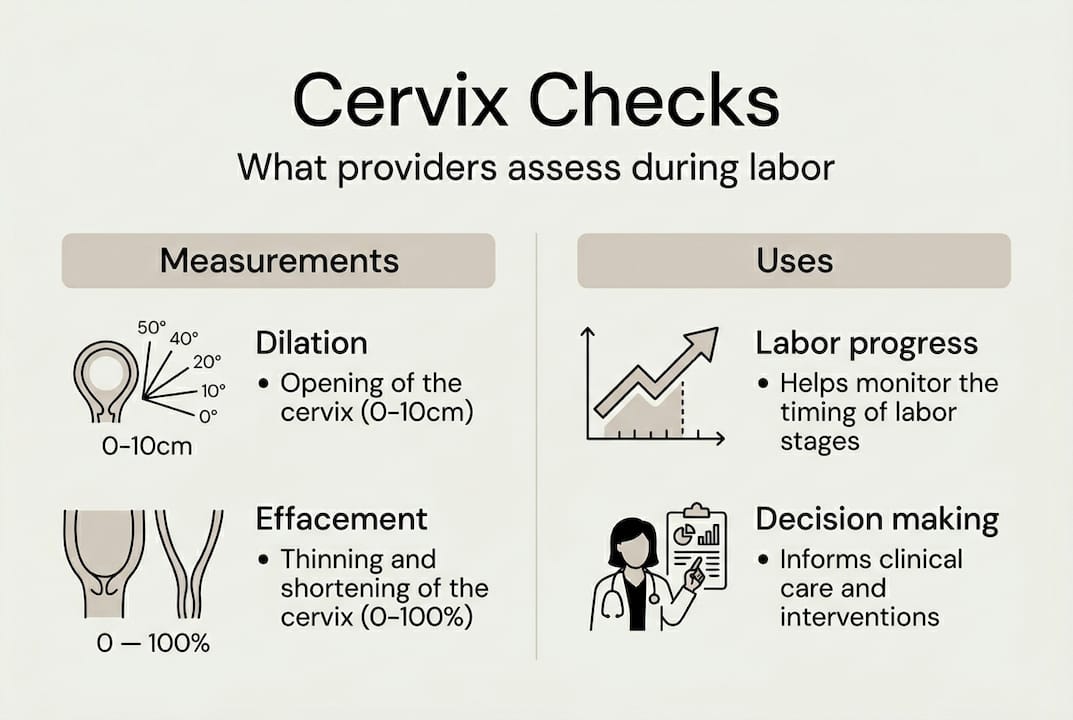
A cervix check is an internal vaginal exam where your healthcare provider assesses two key measurements: dilation and effacement. Dilation refers to how wide your cervix has opened, measured in centimeters from zero to ten. Effacement describes how thin your cervix has become, expressed as a percentage from zero to 100. These measurements indicate how your body prepares for labor and delivery.
Healthcare providers perform cervix checks to monitor labor progression and identify potential complications. Cervix checks help to assess cervical dilation and effacement, which indicate progression toward labor. During the exam, your provider also evaluates cervical position, consistency, and station, which refers to how low the baby has descended into the pelvis. These findings paint a picture of your body’s readiness for birth.
Many expectant mothers believe cervix checks predict exactly when labor will start. This is a common misconception. You can be dilated several centimeters for weeks without going into labor, or you can progress from zero to ten centimeters in hours. Cervix checks provide a snapshot of current status, not a crystal ball for delivery timing.
Pro Tip: Before your first cervix check, write down questions about what the results mean and how they affect your birth plan. Ask your provider to explain findings in plain language and discuss whether routine checks align with your preferences. Bringing a partner or support person helps you remember the conversation and advocate for your comfort.
Providers use cervix check information to make clinical decisions about labor management. If your cervix shows no change over several weeks past your due date, your provider might discuss induction options. Conversely, rapid cervical changes could signal imminent labor, prompting closer monitoring. Understanding these connections helps you participate actively in your care decisions.
When do cervix checks usually start during pregnancy?
For most low-risk pregnancies, routine cervix checks commonly start around 36 weeks, but timing varies. At this point, your body enters the final preparation phase for labor. Your provider begins monitoring cervical changes weekly during routine prenatal appointments. This timing allows adequate assessment without unnecessary early intervention.
Several situations prompt earlier cervix checks before the standard 36-week mark:
- Signs of preterm labor such as regular contractions, pelvic pressure, or fluid leakage
- High-risk pregnancy conditions including preeclampsia, gestational diabetes, or placental complications
- History of preterm birth or cervical insufficiency in previous pregnancies
- Multiple gestation pregnancies where early labor risk increases
- Specific symptoms like bleeding or decreased fetal movement requiring assessment
Your healthcare provider makes individualized decisions about when to begin cervix checks based on your medical history and current pregnancy status. Some providers routinely check all patients starting at 36 weeks, while others wait until 38 or 39 weeks unless symptoms arise. There is no universal protocol, which reflects the personalized nature of prenatal care.
| Scenario | Typical Start Time | Frequency | Reasoning |
|---|---|---|---|
| Low-risk first pregnancy | 36-38 weeks | Weekly | Standard monitoring as due date approaches |
| Low-risk subsequent pregnancy | 36-37 weeks | Weekly | May progress faster than first birth |
| High-risk pregnancy | Variable, often earlier | As needed | Monitor complications and preterm labor risk |
| Signs of preterm labor | Any time symptoms appear | As clinically indicated | Assess cervical changes and labor progression |
| Post-due date | 40+ weeks | Twice weekly or more | Evaluate readiness for possible induction |
First-time mothers often experience cervix checks differently than those with previous births. Your cervix may begin dilating and effacing weeks before labor if this is not your first baby. Providers account for this pattern when interpreting results and planning care. Understanding these variations helps set realistic expectations for your unique situation.
What to expect during a cervix check and how it affects your birth plan
Knowing what happens during a cervix check reduces anxiety and helps you prepare physically and emotionally. Understanding the cervix check procedure helps reduce anxiety and empowers expectant mothers. Here is what typically occurs during the appointment:
- Your provider asks you to undress from the waist down and lie on the exam table with your feet in stirrups or knees bent
- After explaining the procedure, your provider inserts two gloved fingers into your vagina to reach the cervix
- Using gentle pressure, they assess dilation by measuring the cervical opening and effacement by gauging thickness
- The exam takes 30 to 60 seconds, though it may feel longer due to discomfort
- Your provider shares findings immediately and discusses what the measurements mean for your labor timeline
- You can ask questions about results and how they influence upcoming appointments or delivery planning
Many women describe cervix checks as uncomfortable, crampy, or pressure-filled rather than painful. The sensation varies based on cervical position, your relaxation level, and provider technique. Taking slow, deep breaths during the exam helps your pelvic floor muscles relax, making the process smoother. Some women experience light spotting afterward, which is normal and typically resolves quickly.

Cervix check results directly influence your birth plan and labor management decisions. If your cervix remains closed and thick at 40 weeks, your provider might recommend waiting for spontaneous labor or discuss induction timing. Conversely, significant dilation and effacement suggest labor could start soon, prompting conversations about when to head to the hospital or birth center. These findings help you and your care team make informed choices aligned with your preferences.
Pro Tip: Partners can support you during cervix checks by holding your hand, helping you breathe through discomfort, and taking notes on what the provider explains. After the appointment, discuss any concerns together and clarify next steps. Your partner’s presence provides emotional reassurance and ensures both of you understand the information shared.
Communication with your provider about cervix check findings is essential for collaborative care. Ask what the measurements mean in practical terms, whether changes are expected at your stage, and how results affect your birth plan. If you feel uncomfortable with routine checks, discuss alternatives or reduced frequency. Your preferences matter, and open dialogue ensures your care respects your values and comfort.
Risks, benefits, and alternatives to routine cervix checks
Cervix checks offer valuable information but come with considerations worth understanding. Cervix checks are valuable but may cause discomfort and carry minimal risks; alternatives exist to monitor labor progress. Weighing benefits against potential concerns helps you make informed decisions about your prenatal care.
The primary benefits of cervix checks include monitoring labor progression, detecting complications early, and informing delivery timing decisions. When your provider identifies cervical changes, they can prepare for imminent labor or address concerns about delayed progression. This information proves especially valuable for high-risk pregnancies where close monitoring prevents adverse outcomes. Cervix checks also help providers assess whether membrane sweeping might encourage labor naturally.
Potential risks and drawbacks include physical discomfort during the exam, slight infection risk from introducing bacteria, and emotional anxiety about results. Some women find cervix checks invasive or distressing, particularly if they have a history of trauma. Additionally, frequent checks increase the chance of membrane rupture or irritation. The minimal infection risk rises slightly if membranes have already ruptured or if multiple exams occur close together.
Several alternatives exist for assessing labor readiness without internal exams. External monitoring tracks contraction patterns and fetal heart rate, providing insight into labor progression. Ultrasound imaging can visualize cervical length and position non-invasively. Many women successfully gauge labor onset by tracking physical signs like mucus plug loss, bloody show, water breaking, and regular contraction patterns. These methods offer valuable information while respecting personal boundaries.
| Factor | Cervix Checks | External Monitoring | Ultrasound Assessment | Symptom Tracking |
|---|---|---|---|---|
| Invasiveness | Internal exam required | Non-invasive | Non-invasive | Non-invasive |
| Accuracy for dilation | Direct measurement | Cannot measure | Estimates only | Indirect indicators |
| Comfort level | Variable discomfort | Comfortable | Comfortable | Comfortable |
| Infection risk | Minimal but present | None | None | None |
| Information provided | Dilation, effacement, station, position | Contractions, fetal status | Cervical length, position | Labor onset signs |
| Frequency options | Weekly or as needed | Continuous or intermittent | Occasional | Ongoing self-monitoring |
When discussing cervix checks with your healthcare provider, consider these points:
- Your comfort level with internal exams and any concerns about the procedure
- Whether routine checks align with your birth philosophy and preferences
- Your pregnancy risk level and whether closer monitoring provides clinical benefit
- Alternative methods that might offer sufficient information for your situation
- The frequency of checks and whether you prefer fewer exams as your due date approaches
- How results will influence care decisions and whether that information changes your choices
Your provider should respect your preferences while explaining their clinical reasoning for recommended care. If routine cervix checks do not align with your values, discuss modified approaches that balance your comfort with appropriate monitoring. Informed consent means you understand why checks are suggested and feel empowered to accept, decline, or negotiate the frequency.
How Serenity Doula supports your pregnancy and birth journey
Understanding cervix checks represents just one aspect of preparing for childbirth. Comprehensive support throughout pregnancy and labor helps you feel confident and informed. Doulas provide continuous emotional, physical, and informational support that complements your medical care team. At Serenity Doula, we walk alongside expectant families through every stage, offering personalized pregnancy and birth support tailored to your unique needs and preferences.

Our childbirth education classes empower you with knowledge about labor progression, pain management options, and medical procedures like cervix checks. We help you understand what to expect and how to communicate effectively with your healthcare providers. Learning about the many benefits doula support provides shows how this additional layer of care enhances your birth experience, whether you choose natural, medicated, or cesarean delivery. Our holistic approach ensures you feel prepared, supported, and respected throughout your journey into parenthood.
When do cervix checks start FAQs
What exactly is a cervix check?
A cervix check is an internal vaginal exam where your healthcare provider inserts gloved fingers to assess your cervix. They measure dilation in centimeters, effacement as a percentage, and evaluate position and consistency. This quick procedure provides a snapshot of how your body prepares for labor.
Can cervix checks induce labor?
Cervix checks alone do not typically induce labor, though membrane sweeping during an exam might encourage labor onset. Some women experience mild cramping or contractions afterward, but these usually subside quickly. The exam itself simply assesses current status rather than triggering labor.
How often will cervix checks happen closer to delivery?
Frequency varies by provider and pregnancy status, but weekly checks are common starting around 36 to 38 weeks. If you go past your due date, checks may increase to twice weekly. You can discuss reducing frequency if you prefer fewer exams or if results show minimal change.
Are cervix checks necessary for every pregnancy?
Cervix checks are not medically required for every pregnancy, especially low-risk situations. Many women decline routine checks and rely on labor signs to determine when to contact their provider. Discuss your preferences with your healthcare team to create a monitoring plan that respects your comfort while ensuring appropriate care.
What if I feel uncomfortable during a cervix check?
Communicate discomfort to your provider immediately so they can adjust their technique or pause. Deep breathing and conscious relaxation help ease tension. If you find checks too distressing, discuss alternatives or reduced frequency with your provider. Your emotional and physical comfort matters, and good providers will work with your needs.
Do cervix check results predict when labor will start?
Cervix check results show current status but cannot precisely predict labor timing. You might be dilated for weeks without labor starting, or progress rapidly from zero dilation to delivery. Results guide clinical decisions and help you understand your body’s preparation, but labor onset depends on multiple factors beyond cervical measurements.
Recommended
- Our Services – Serenity Doula
- Postpartum Care – Serenity Doula
- 5 Powerful Ways to Prepare Your Mind and Body for Labor and Birth – Serenity Doula
- What Does a Doula Do? Why You Might Want One Even If You Have a Doctor or Midwife – Serenity Doula
- Pregnancy and Dental Health: Complete Care Guide | Paynless