

Preparing for birth can feel overwhelming when you are not sure where to start or what truly matters. Many expectant parents worry about whether they are doing enough to ensure a positive experience for themselves and their baby. The good news is that birth preparation does not have to be complicated. This guide walks you through practical steps to build physical strength, mental calm, and emotional confidence while connecting you with the support systems that make all the difference during labor and beyond.
Table of Contents
- Key takeaways
- Understanding the essentials of birth preparation
- Step by step guide to preparing for a calm and supported birth
- Common challenges in birth preparation and how to overcome them
- What to expect after birth: planning for postpartum wellbeing
- Find personalized support from Serenity Doula
- Frequently asked questions about preparing for birth
Key Takeaways
| Point | Details |
|---|---|
| Physical mental preparation | Birth readiness hinges on addressing physical fitness, mental calm, and emotional confidence through targeted exercise, nutrition, and stress management. |
| Calm birth space | Creating dim lighting, soothing sounds, and personal comforts helps trigger oxytocin and support smoother labor. |
| Doula support value | A doula provides continuous emotional and physical support that complements medical care and reduces stress during labor. |
| Education for confidence | Childbirth education equips you with knowledge about labor stages and pain management to replace fear with confidence. |
| Postpartum planning | Planning for postpartum needs, including supplies and recovery considerations, helps bridge birth and the initial weeks at home. |
Understanding the essentials of birth preparation
Birth preparation starts with recognizing that your body, mind, and emotions all need attention. Physical health forms the foundation. Eating nutrient dense foods fuels your energy reserves, while gentle exercise like walking or prenatal yoga strengthens muscles you will rely on during labor. Do not overlook oral health during pregnancy either, as gum health directly affects your overall wellbeing and birth outcomes.
Mental wellness matters just as much as physical fitness. Anxiety about labor is completely normal, but letting it spiral unchecked can make the experience harder than it needs to be. Simple relaxation techniques like deep breathing, guided imagery, or meditation help you stay grounded when contractions intensify. Practicing these tools now means they will feel natural when you need them most.
Gathering supplies early removes last minute stress. Stock up on essentials like comfortable clothing, nursing bras, postpartum pads, and newborn diapers well before your due date. Create a dedicated space for these items so you know exactly where everything is when labor begins. This small step brings surprising peace of mind.
Exploring childbirth education resources early gives you time to absorb information without rushing. Classes teach you what to expect during each stage of labor, pain management options, and how to communicate effectively with your birth team. Knowledge replaces fear with confidence.
Pro Tip: Start your birth preparation checklist in the second trimester. This gives you plenty of time to research, practice techniques, and make informed decisions without feeling rushed as your due date approaches.
Step by step guide to preparing for a calm and supported birth
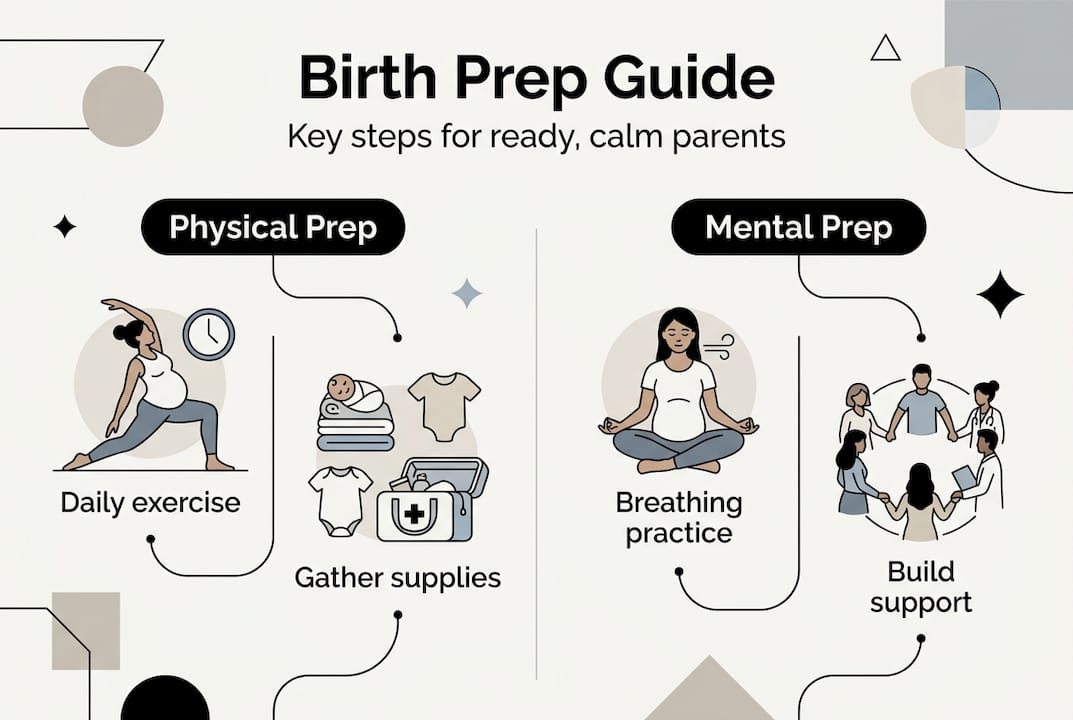
Follow these steps to build a comprehensive preparation plan that covers every angle. Start by focusing on your physical body. Incorporate exercises that strengthen your pelvic floor, core, and legs. Squats, pelvic tilts, and gentle stretches prepare muscles for the work of labor. Pair this with balanced nutrition that includes plenty of protein, healthy fats, and iron rich foods to support your energy levels and blood volume.

Next, establish a daily mental practice. Set aside 10 to 15 minutes each day for breathing exercises or visualization. Picture yourself moving through labor calmly and confidently. Imagine your body opening and your baby descending smoothly. This mental rehearsal trains your brain to respond with calm instead of panic when contractions begin.
Now turn your attention to your birth space. Whether you plan a home birth or hospital delivery, creating a calm birth space dramatically improves your experience. Dim lighting, soothing music, and familiar scents help your body release oxytocin, the hormone that drives labor progress. Pack items that bring you comfort, like a favorite pillow, essential oils, or photos that make you smile.
Choosing your birth team is one of your most important decisions. Consider the benefits of having a doula alongside your medical provider. Doulas offer continuous emotional and physical support, helping you stay calm and advocating for your preferences. They do not replace doctors or midwives but complement medical care with personalized attention that reduces stress and improves outcomes.
Finally, create and review your birth plan. Write down your preferences for pain management, movement during labor, and immediate postpartum care. Share this document with your entire birth team so everyone understands your wishes. Practice discussing your plan out loud so you feel comfortable speaking up during labor.
| Preparation step | Timeline | Key actions |
|---|---|---|
| Physical conditioning | Second trimester onward | Daily exercise, nutrition focus, pelvic floor work |
| Mental practice | Third trimester daily | Breathing exercises, visualization, relaxation |
| Birth space planning | 4-6 weeks before due date | Gather comfort items, test lighting and music |
| Birth team selection | Second trimester | Interview doulas, confirm provider support |
| Birth plan finalization | 36 weeks | Write preferences, share with team, practice communication |
Pro Tip: Practice your breathing techniques during everyday moments of mild discomfort, like a stubbed toe or muscle cramp. This trains your brain to automatically reach for these tools when labor intensity builds.
Common challenges in birth preparation and how to overcome them
Emotional stress often peaks in the final weeks of pregnancy. You might find yourself worrying about pain, complications, or whether you will know when labor starts. These fears are valid, but dwelling on worst case scenarios drains your energy. Combat anxiety by focusing on what you can control. Attend childbirth classes, practice relaxation daily, and surround yourself with positive birth stories instead of horror tales.
Misinformation spreads quickly, especially online. You will encounter conflicting advice about everything from epidurals to eating during labor. Some sources claim natural birth is the only healthy option, while others insist medical interventions are always necessary. The truth lies somewhere in between, and your ideal birth is the one that feels right for you. Filter advice through evidence based sources and trust your instincts.
Feeling unprepared is incredibly common, even if you have done everything on your checklist. Birth is unpredictable by nature, and no amount of planning guarantees a specific outcome. Instead of aiming for perfection, focus on building flexibility. Learn about different scenarios so you can adapt when plans change. This mindset shift transforms preparation from rigid control to confident adaptability.
Seeking professional support makes an enormous difference when you feel overwhelmed. Doula support benefits include personalized guidance that addresses your specific concerns and circumstances. A doula helps you process fears, understand your options, and develop coping strategies tailored to your personality and preferences. This individualized attention fills gaps that generic advice cannot address.
“Support from doulas and education reduces anxiety and enhances decision making during birth, helping parents feel empowered rather than helpless throughout the process.”
Investing in childbirth education benefits pays off when you face unexpected situations during labor. Classes teach you the physiology behind contractions, how interventions work, and what questions to ask your providers. This knowledge helps you participate actively in decisions rather than feeling like things are happening to you. Understanding the process reduces fear and builds trust in your body’s capability.
Managing pregnancy anxiety requires acknowledging your feelings without judgment. Talk openly with your partner, friends, or a therapist about your worries. Sometimes simply voicing fears out loud diminishes their power. Other times you need professional help to work through deeper concerns. There is no shame in asking for support.
What to expect after birth: planning for postpartum wellbeing
Postpartum recovery demands just as much attention as birth preparation, yet many parents overlook this phase until their baby arrives. Your body needs weeks to heal from delivery, whether you had a vaginal birth or cesarean. Physical needs include managing pain, supporting healing tissues, and adjusting to dramatic hormonal shifts. Emotional needs center on processing your birth experience, bonding with your baby, and navigating the identity shift into parenthood.
Understanding different postpartum care approaches helps you plan effectively. Some families rely heavily on partners and relatives for support. Others hire professionals like postpartum doulas or night nurses. Many combine both approaches, using family for emotional support and professionals for expert guidance on feeding, sleep, and recovery.
| Care approach | Best for | Considerations |
|---|---|---|
| Family support | Families with available, helpful relatives nearby | Requires clear communication about needs and boundaries |
| Professional postpartum doula | Parents wanting expert guidance and non judgmental support | Investment in specialized care tailored to your family |
| Postpartum support groups | Building community and normalizing challenges | Requires energy to attend and engage socially |
| Combination approach | Most families seeking balanced support | Needs coordination but provides comprehensive coverage |
Building your support system before delivery prevents scrambling later. Identify who will help with meals, household tasks, and sibling care if you have older children. Be specific about what you need rather than hoping people will guess. Most loved ones want to help but do not know how unless you tell them directly.
Postpartum care services provide professional support during the vulnerable early weeks. Postpartum doulas offer evidence based guidance on infant feeding, soothing techniques, and sleep strategies while also caring for your physical and emotional recovery. They create space for you to rest and heal while ensuring your baby is well cared for.
Establishing healthy newborn routines starts with flexibility. Newborns do not follow schedules in the early weeks, and trying to impose rigid routines often backfires. Instead, watch for your baby’s cues and respond consistently. Over time, natural patterns emerge that you can gently shape into routines. Focus first on meeting basic needs for food, sleep, and comfort.
Prioritize your own recovery alongside baby care. Accept help with household tasks so you can focus on healing and bonding. Sleep when your baby sleeps instead of tackling chores. Nourish your body with easy, nutritious meals. Give yourself permission to do nothing but rest and care for your newborn during those first weeks.
Explore comprehensive doula services overview options to understand how professional support extends beyond birth into postpartum. Continuous care from pregnancy through postpartum creates consistency and deeper understanding of your family’s unique needs.
Pro Tip: Prepare freezer meals and set up a meal train before your due date. Having nutritious food ready to eat removes one major stressor during postpartum recovery when cooking feels impossible.
Find personalized support from Serenity Doula
Preparing for birth becomes significantly easier when you have experienced guides walking alongside you. Serenity Doula offers pregnancy birth support doula services tailored to your specific needs, preferences, and circumstances. Whether you are planning a natural birth, choosing an epidural, or preparing for a cesarean, professional support helps you feel confident and cared for throughout the entire journey.
Comprehensive childbirth education classes empower you with knowledge that transforms anxiety into excitement. You will understand what is happening in your body during each stage of labor, learn practical comfort techniques, and discover how to communicate effectively with your medical team. Education is not just about information but about building unshakeable confidence in your ability to birth your baby. When you learn what a doula does, you discover how personalized, continuous support addresses both the practical and emotional aspects of birth preparation and the birth experience itself.
Frequently asked questions about preparing for birth
What are the best ways to reduce anxiety before labor?
Practice daily relaxation techniques like deep breathing, meditation, or prenatal yoga to train your nervous system to stay calm under stress. Attend childbirth education classes to replace fear of the unknown with practical knowledge. Surround yourself with positive birth stories and supportive people who believe in your ability to birth your baby.
How early should I start preparing physically for birth?
Begin physical preparation in your second trimester, around 14 to 16 weeks, when morning sickness typically subsides and you have energy for exercise. This timeline gives you several months to build strength and stamina gradually. Focus on exercises that strengthen your pelvic floor, legs, and core while maintaining flexibility through stretching.
What exactly can a doula do to support me during childbirth?
A doula provides continuous emotional reassurance, physical comfort measures like massage and positioning suggestions, and advocacy for your preferences with medical staff. Doula roles explained include helping you process information, make informed decisions, and stay focused during intense moments. Unlike medical providers who manage clinical aspects, doulas focus entirely on your emotional and physical comfort throughout labor.
How can I create a calm and safe environment for labor?
Control lighting by using lamps or candles instead of harsh overhead lights, play music that soothes you, and bring familiar comfort items like your own pillow or blanket. Use aromatherapy with scents like lavender or peppermint to promote relaxation. Minimize interruptions and limit the number of people in your birth space to only those who support your sense of safety and calm.
What postpartum preparations are most important?
Arrange help for household tasks and meals before your due date so you can focus on recovery and bonding. Stock up on postpartum supplies like pads, comfortable clothing, and easy snacks. Learn about childbirth education details that cover postpartum expectations, including physical recovery timelines and emotional adjustment. Consider hiring a postpartum doula for expert guidance during the vulnerable early weeks. Most importantly, give yourself permission to rest and accept help without guilt.